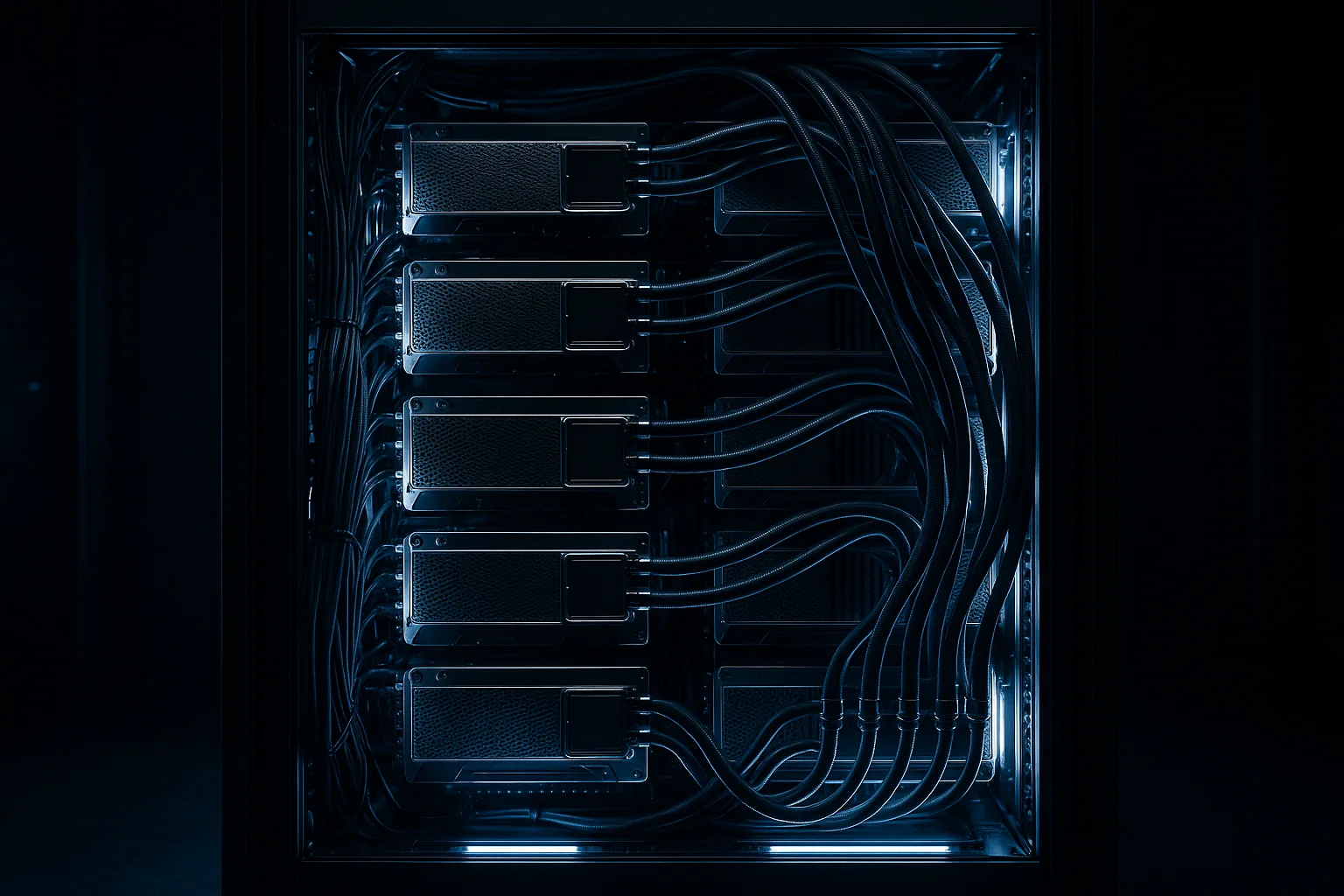
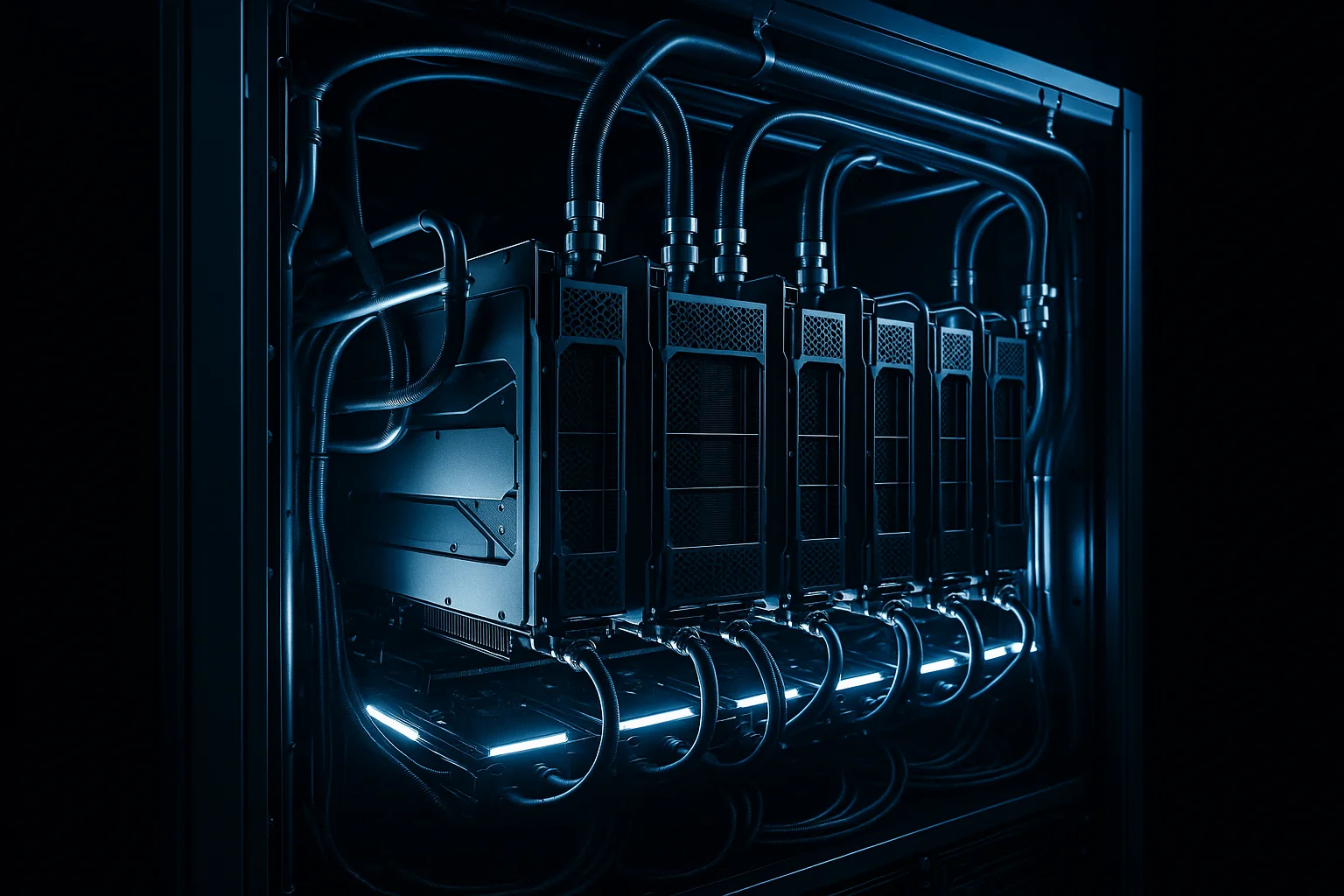
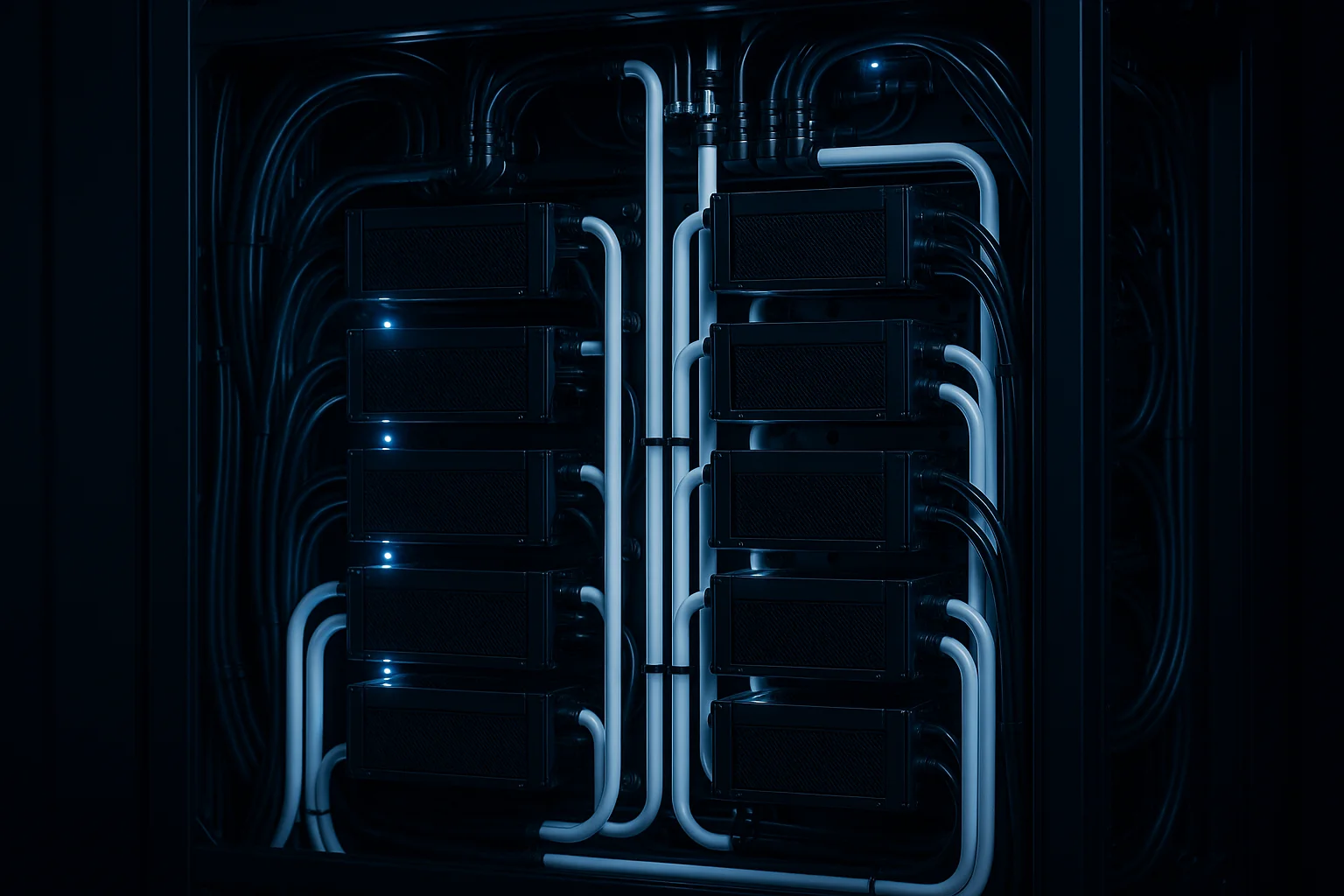
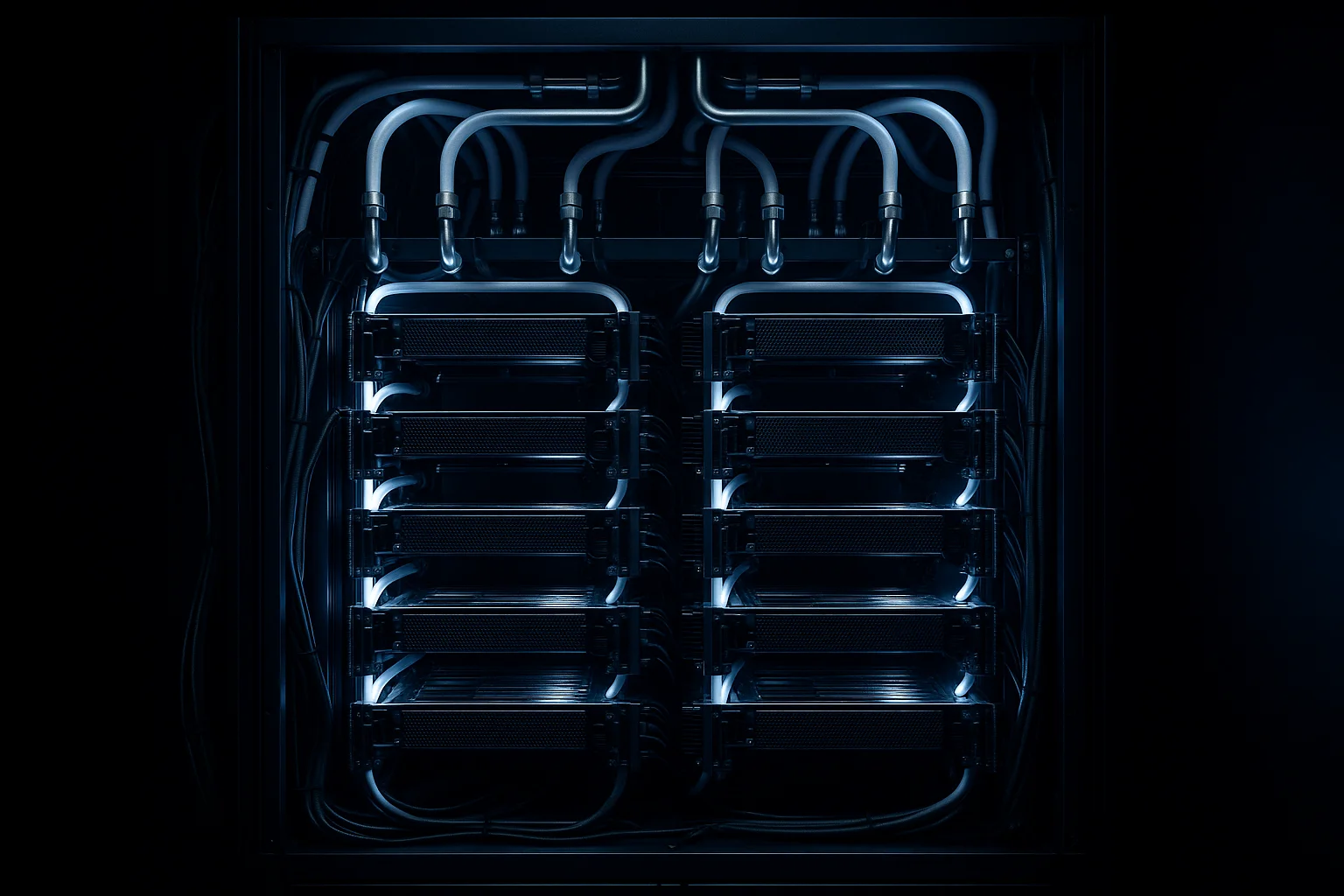
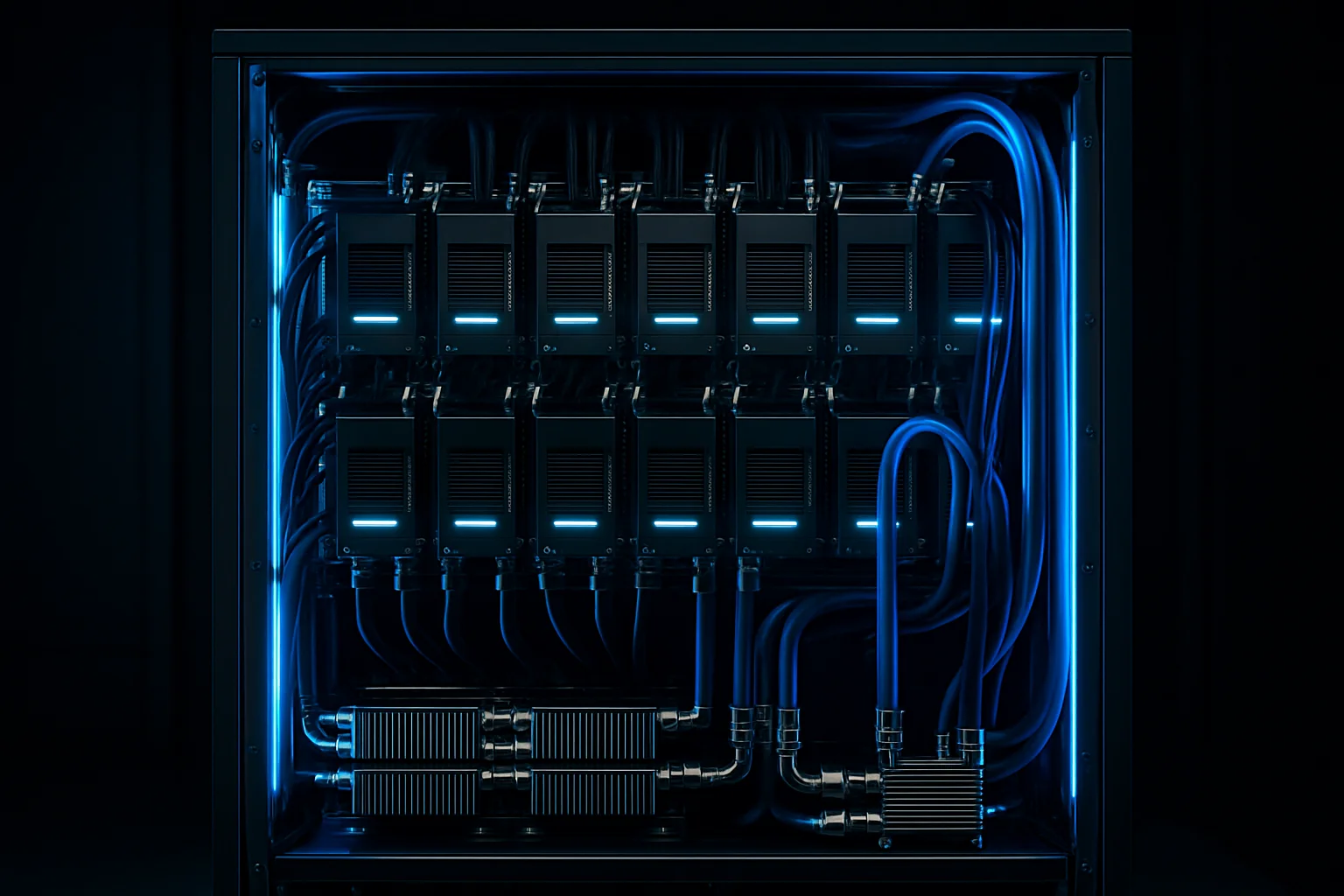
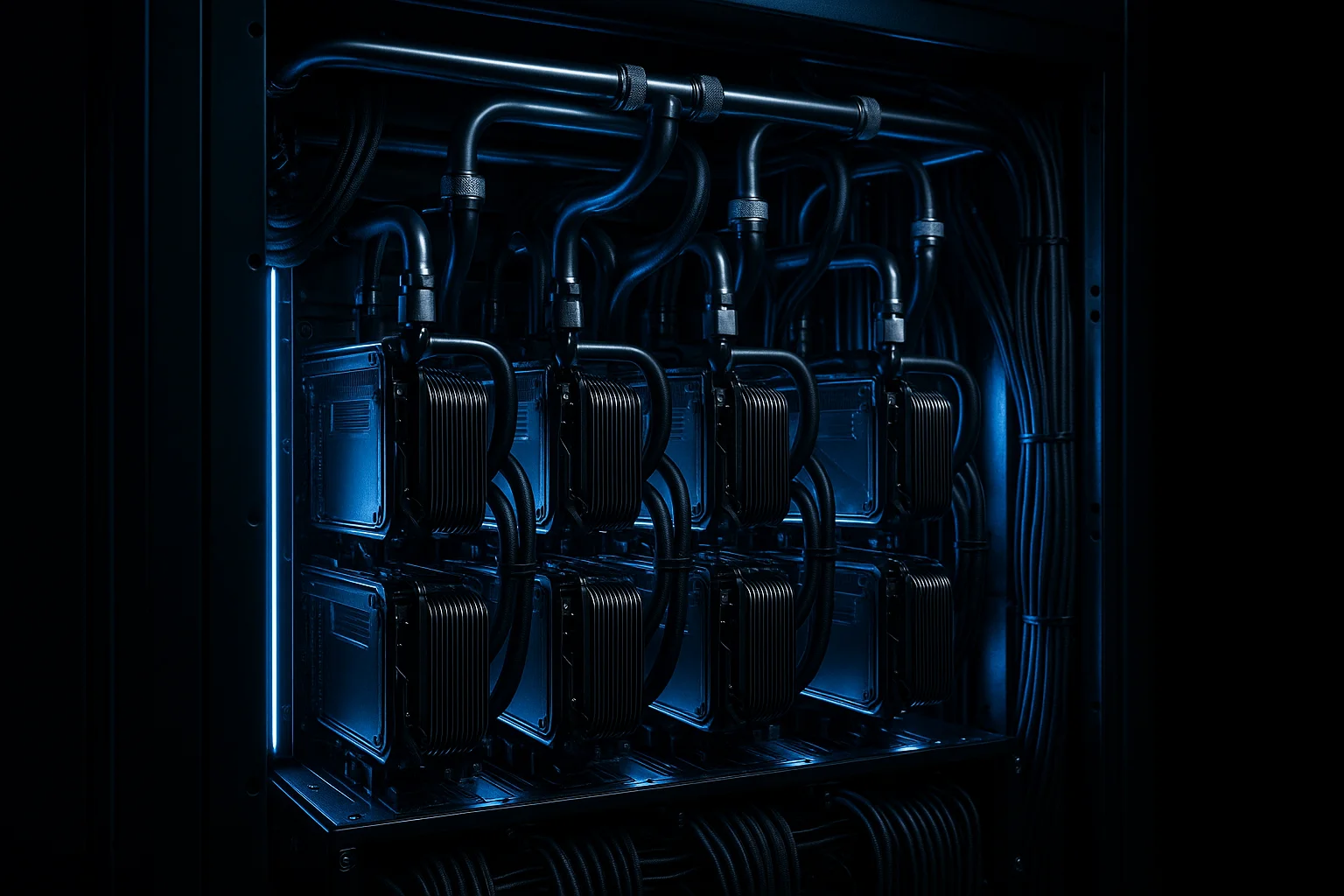
Direct-to-chip liquid cooling at IDACORE East is being designed for 120kW per cabinet, with true 2N power (independent grid plus gas generation, not generator backup), targeting a PUE of ~1.10. The Eastern Oregon site is pre-leasing via LOI now, targeting Q4 2026, with Phase 1 delivering 5MW IT load across 40 cabinets.
Why Design for 120kW Before Anyone's Racked a Server?
Here's the problem with waiting to design cooling until GPUs show up: by the time you're troubleshooting thermal throttling on a live cluster, the concrete's already poured. Air-cooled data halls topped out somewhere around 15-20kW per cabinet years ago. A single NVIDIA H100 GPU pulls 700W. Pack eight into a server and you're at 5.6kW before networking, storage, or CPU overhead. Stack multiple servers per rack and you blow past what any air handler can move, no matter how much you spend on CRAC units.
We're not retrofitting Boise for this. IDACORE East is a clean-sheet build in Eastern Oregon specifically because GPU density needs infrastructure designed around it, not bolted onto it. Direct-to-chip liquid cooling moves heat away from the die directly, not through a room's ambient air. That's what makes 120kW per cabinet a design target instead of a fantasy number on a spec sheet.
Why does this matter if you're evaluating colocation for a training cluster launching in 2027? Because thermal architecture decisions get locked in at the concrete stage. You can't add liquid cooling loops to a facility that was poured for air. If your GPU roadmap says 2027 or 2028, the facility you're evaluating today needs to already be designed for where density is heading, not where it sat in 2019.
What Does "True 2N" Mean Here?
A lot of facilities use "2N" loosely to mean "we have backup generators." That's N+1 with better marketing. True 2N, as we're designing it for IDACORE East, means two fully independent power paths from source to cabinet: one from grid utility, one from on-site gas generation, each capable of carrying full load independently. Not a UPS bridging you to diesel. Two live, parallel paths.
For a 120kW cabinet running a training job that takes three weeks to complete, a power event isn't an inconvenience — it's three weeks of compute and the associated cloud spend, gone. True 2N is the design decision that makes that failure mode a non-issue instead of a risk you're pricing into your SLA with your own customers.
How Does Eastern Oregon Compare to Hyperscaler GPU Instances?
Let's talk numbers, because "cheaper" without math is just marketing copy.
| Factor | IDACORE East (planned) | Typical Hyperscaler GPU Instance |
|---|---|---|
| Power billing | $175/kW/month + utility at cost | Bundled into instance price, opaque |
| Density per cabinet | 120kW (direct-to-chip liquid) | Typically 15-40kW air-cooled equivalent |
| Cooling overhead (PUE) | ~1.10 target | Often 1.3-1.5 in shared cloud regions |
| Minimum commitment | 1MW | None stated, but egress and instance premiums add up fast |
| Cost transparency | Fixed rate, utility pass-through at cost | Variable, bundled, hard to forecast |
At $0.055/kWh Idaho Power commercial rates as your regional benchmark (Eastern Oregon utility pricing is separately contracted and passed through at cost, no markup), a 1MW deployment running at ~1.10 PUE means you're paying for compute, not for a data center guessing wrong about airflow. Hyperscaler GPU pricing bundles power, cooling inefficiency, and margin into a single per-hour rate you can't decompose. When your finance team asks "why did our AI infrastructure bill jump 40% this quarter," a bundled hyperscaler invoice gives you no lever to pull. A colocation deal with transparent power billing does.
What About Free Cooling?
Eastern Oregon's climate is part of the design math, not incidental. We're targeting free air cooling for roughly 8 months a year, which is why the PUE target sits near 1.10 rather than the 1.4-1.5 you'll see in facilities fighting humidity and heat most of the year. Combine that with direct-to-chip liquid cooling handling the concentrated heat load at the chip level, and the mechanical cooling burden drops substantially compared to a legacy air-cooled hall trying to brute-force 120kW cabinets. It doesn't.
What Does Phase 1 Actually Include?
IDACORE East's Phase 1 is planned for 5MW of IT load across 40 cabinets. That's not a token pilot — at 120kW design density, 40 cabinets is a real GPU footprint capable of supporting multiple large training runs or a sizable inference fleet simultaneously. The full site is planned at 20MW, so Phase 1 is roughly a quarter of total build-out, sized to prove the design and bring committed customers online before scaling further.
Connectivity is being planned with 5 diverse fiber routes across 2 separate physical entry points — redundancy that matters when a single fiber cut shouldn't take down a multimillion-dollar training cluster. Private transport to IDACORE Boise is planned as well, giving customers a path to pair GPU compute in Eastern Oregon with general-purpose colocation in Boise without routing traffic across the public internet. (To be clear: this is private transport between sites, not a dark fiber run — the distinction matters if you're doing your own capacity planning.)
What Should You Do If You Need GPU Colocation Before Q4 2026?
Be honest about your timeline. If you need racked capacity in the next six months, IDACORE East isn't your answer — it's pre-leasing via LOI now, with the facility targeting Q4 2026. What you get by engaging now is a seat at the table on cabinet allocation, power commitment sizing, and connectivity planning before the site fills. Reserving your 1MW minimum during pre-leasing means your deployment gets designed in from the start rather than squeezed into whatever's left.
If your GPU cluster needs to be live sooner, IDACORE Boise is operating today with 1.4MW of capacity, N+1 UPS and cooling, and per-U to full cabinet colocation — not built for 120kW density, but a real option for smaller GPU or inference workloads that don't need liquid cooling.
Frequently Asked Questions
When will IDACORE East be operational?
IDACORE East is targeting Q4 2026 for initial operation, with Phase 1 delivering 5MW of IT load across 40 cabinets. The site is currently in pre-leasing via LOI. It is not built yet, and no capacity can be occupied today.
What cooling method is IDACORE East designing for?
IDACORE East is designed for direct-to-chip liquid cooling, targeting 120kW per cabinet. This moves heat directly from the GPU or CPU die rather than relying on room air, which is required at densities far beyond what traditional air cooling can handle.
What's the minimum commitment for IDACORE East?
IDACORE East requires a 1MW minimum power commitment. Pricing is $175/kW/month base rate plus utility pass-through billed at cost, with no markup on the utility portion.
How does IDACORE East's power billing compare to hyperscaler GPU pricing?
IDACORE East bills power transparently: a fixed $175/kW/month rate plus utility cost pass-through. Hyperscaler GPU instances bundle power, cooling overhead, and margin into a single opaque hourly rate, making costs difficult to forecast or decompose when bills spike.
Can I reserve capacity at IDACORE East before it's built?
Yes. IDACORE East is pre-leasing now via Letter of Intent (LOI). Committing early lets you influence cabinet allocation, power sizing, and connectivity planning ahead of Q4 2026 delivery, rather than taking whatever capacity remains once Phase 1 fills.
If your GPU roadmap points toward multi-megawatt density in the next 18 months, the time to lock in cabinet allocation at IDACORE East is during pre-leasing, not after Phase 1 sells out — talk to our team about reserving your position.