Free air cooling works — when the climate cooperates. Sites in the right geography can hit PUE figures around 1.10 annually, cutting cooling overhead to nearly nothing for months at a time. But "free air cooling" on a spec sheet doesn't tell you how many hours per year the system actually runs in economizer mode versus falling back on mechanical cooling. That number is everything.
What Does "Free Air Cooling" Actually Mean in Practice?
Free air cooling — also called air-side economization — pulls outside air into the facility to reject heat from servers instead of running compressors and chillers. When outside temperatures drop below your switchover threshold (typically somewhere between 55°F and 65°F depending on design), you're moving heat for almost nothing. Fan energy only. No refrigeration cycle.
The catch is that threshold. Cross it, and your facility switches to mechanical cooling. Compressors spin up. PUE climbs. The efficiency story you built your business case around starts to erode.
A site in Phoenix might claim free air cooling capability. Technically true. It might even use it — from November through February. The other eight months, it's running chillers at full load. Annual PUE ends up at 1.4 or worse, and the "free air cooling" bullet point on the sales sheet was doing a lot of misleading work.
What Climate Data Should You Actually Ask For?
When a colocation provider mentions free air cooling, ask for the number of hours per year the facility operates in economizer mode. Not a percentage. Hours. Then cross-reference it against NOAA climate data for that location.
What you're looking for:
- Dry bulb temperature below your switchover threshold for as many hours as possible
- Wet bulb temperature low enough that humidity doesn't force you off economizer even when dry bulb looks fine
- Diurnal swing — locations with large day-to-night temperature differences (high desert, for example) can run economizer at night even when daytime temps are marginal
Eastern Oregon checks all three boxes. High desert climate, low humidity, significant temperature swings. That's why IDACORE East can run free air cooling for roughly 8 months per year and still target a PUE of ~1.10 annually. It's not a marketing number — it's what the climate data supports.
Why PUE Math Gets Complicated With GPU Workloads
Here's where a lot of AI infrastructure buyers make an expensive mistake: they conflate facility-level PUE with per-rack cooling capability.
A 1.10 PUE tells you how efficiently the building moves power from the utility meter to the IT equipment. It says nothing about whether your 80kW H100 cabinet actually stays cool.
Air cooling — free or mechanical — has a hard ceiling. Somewhere around 20–30kW per cabinet, you're pushing the limits of what airflow can remove from a standard rack. A single DGX H100 system draws around 10kW. A four-node H100 cluster in one cabinet can hit 40kW easily. Stack a dense GPU configuration and you're looking at 80–120kW per rack.
At those densities, air is the wrong medium. Physics, not preference.
Direct-to-Chip Liquid Cooling Is the Actual Solution for Dense AI Racks
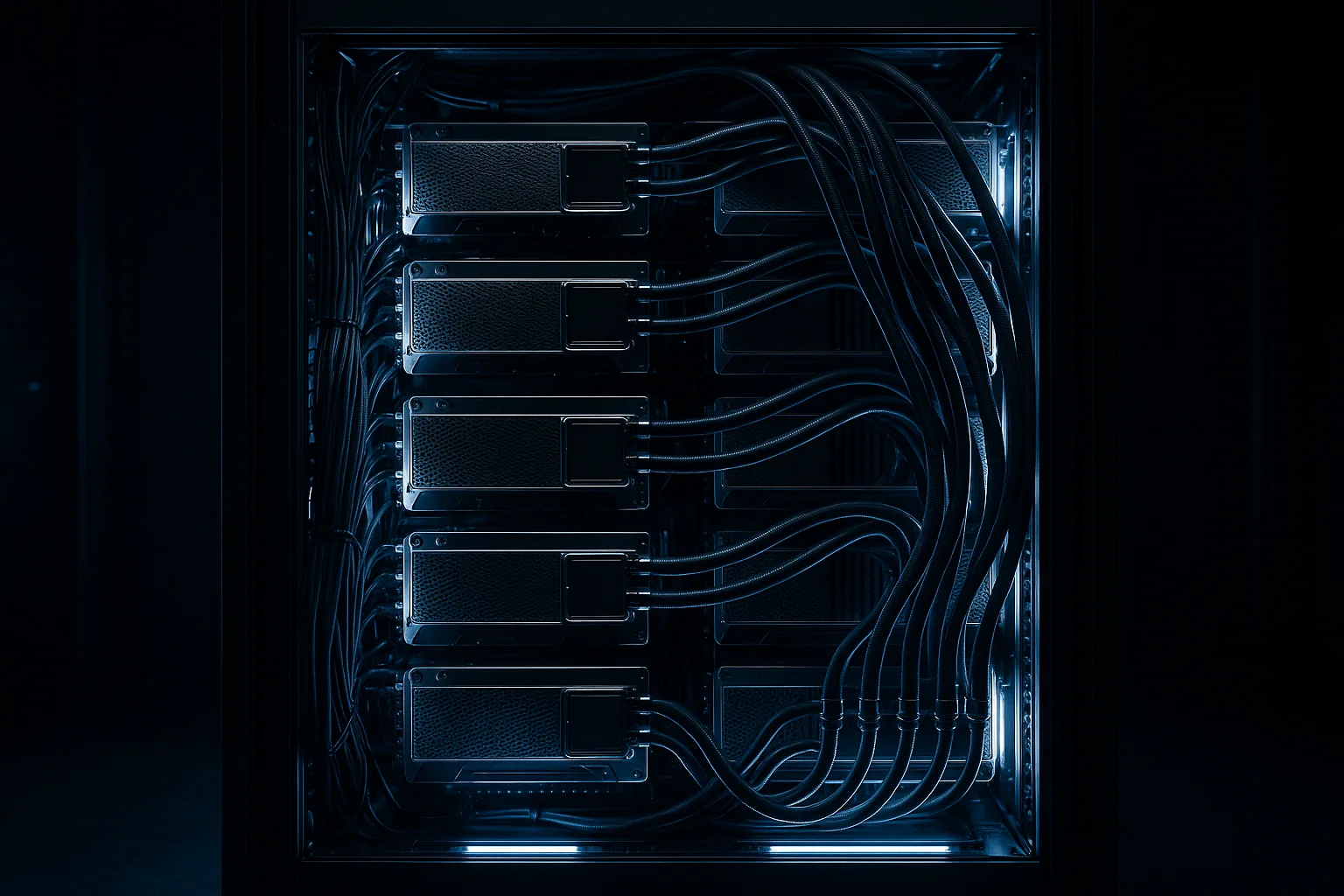
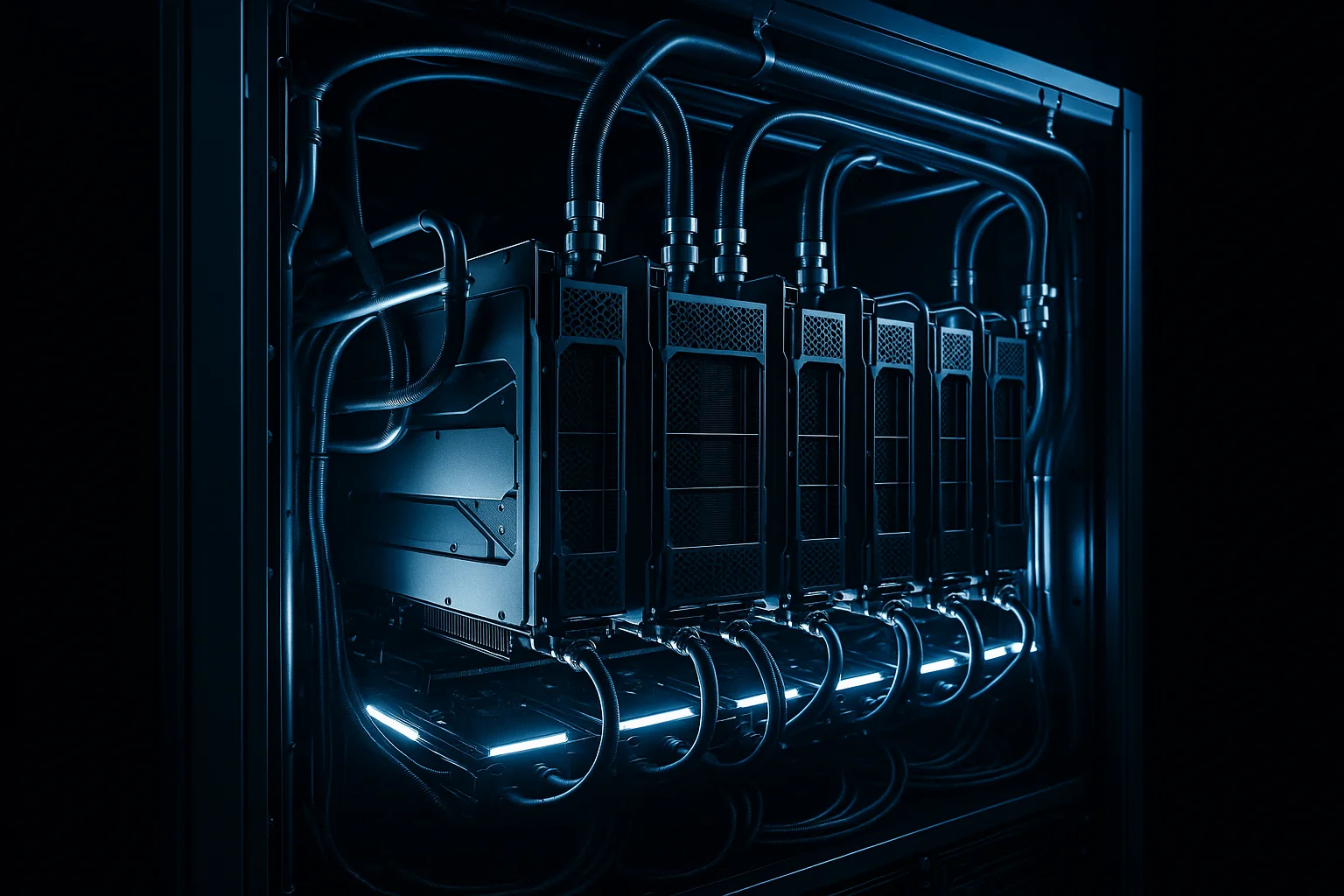
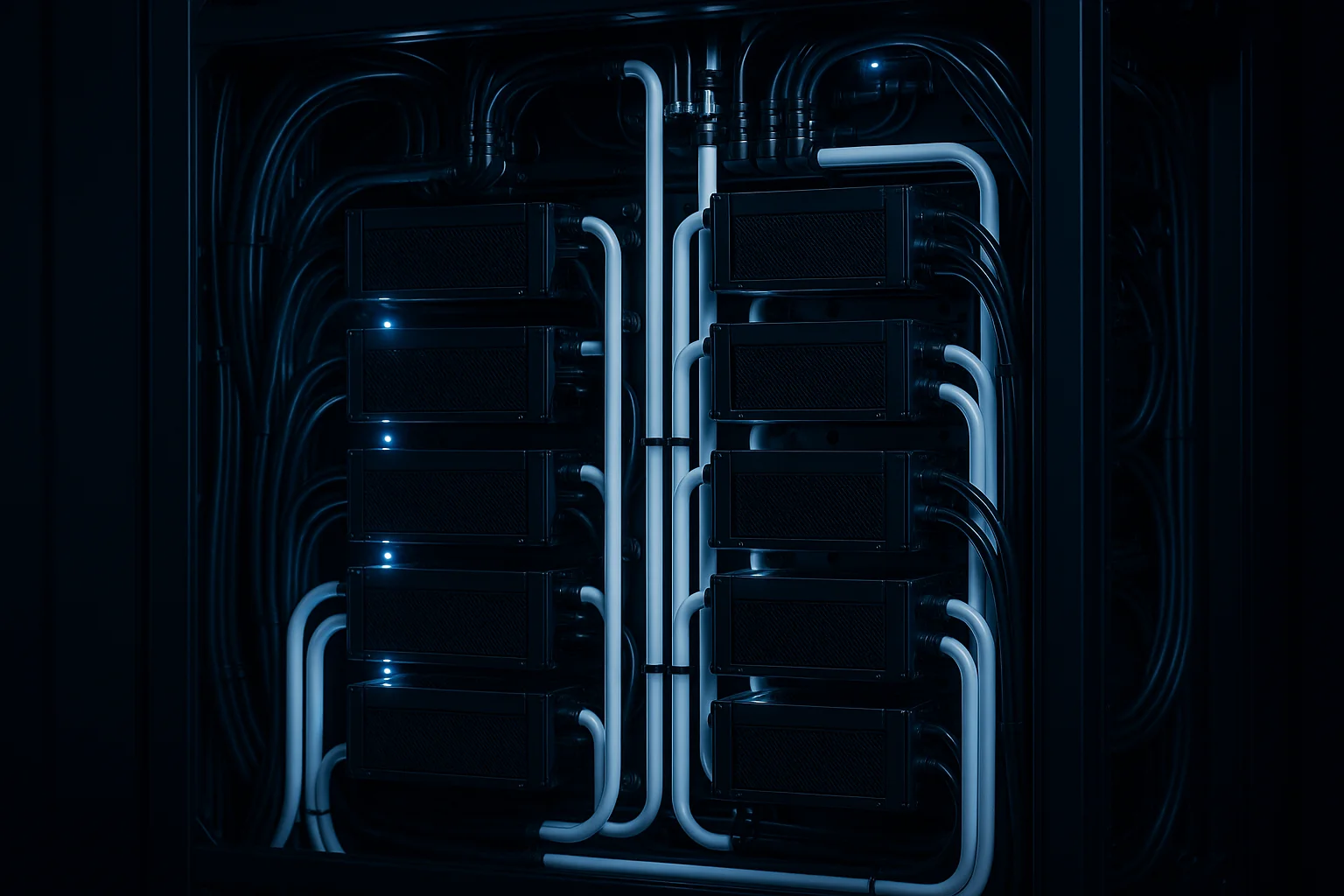
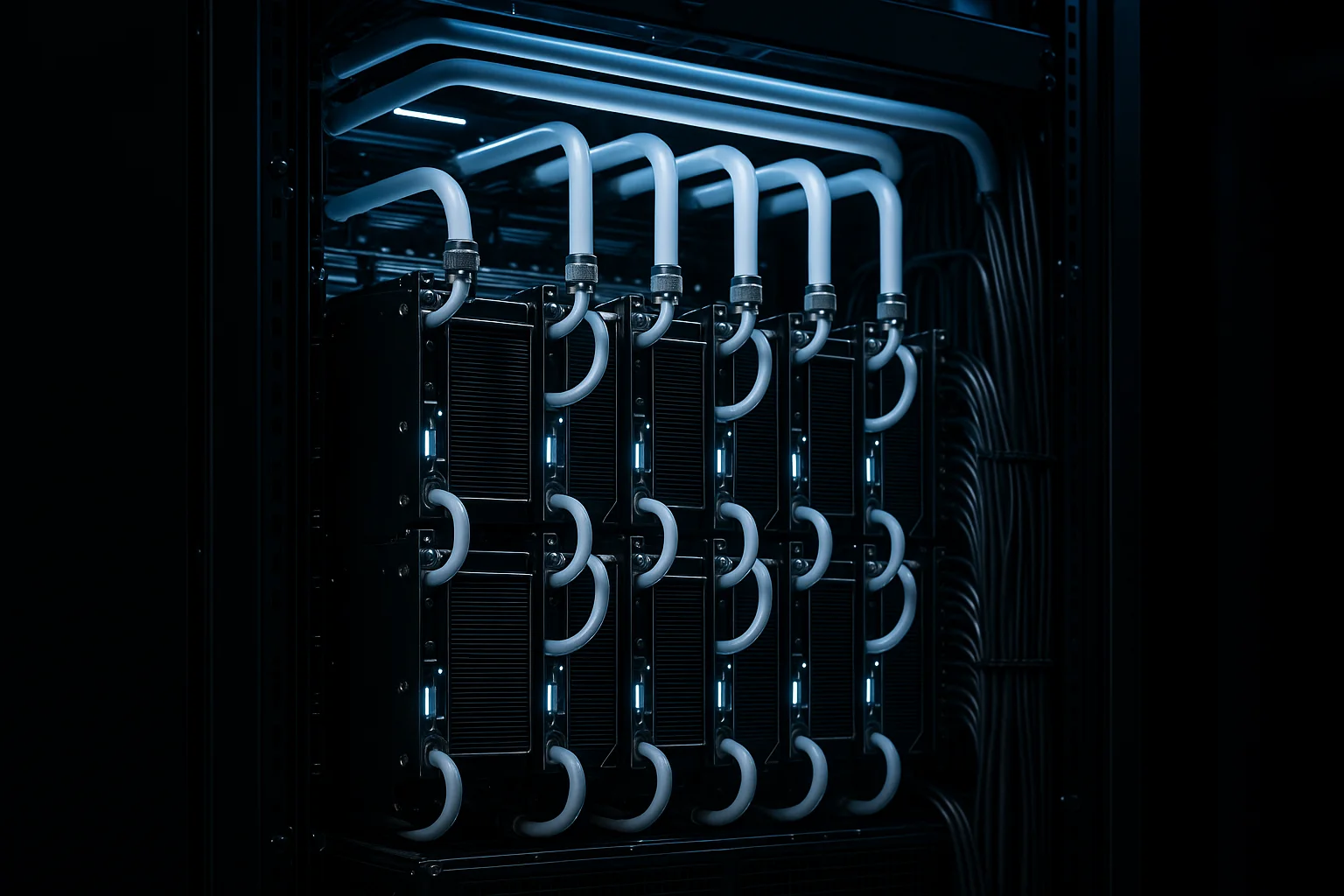
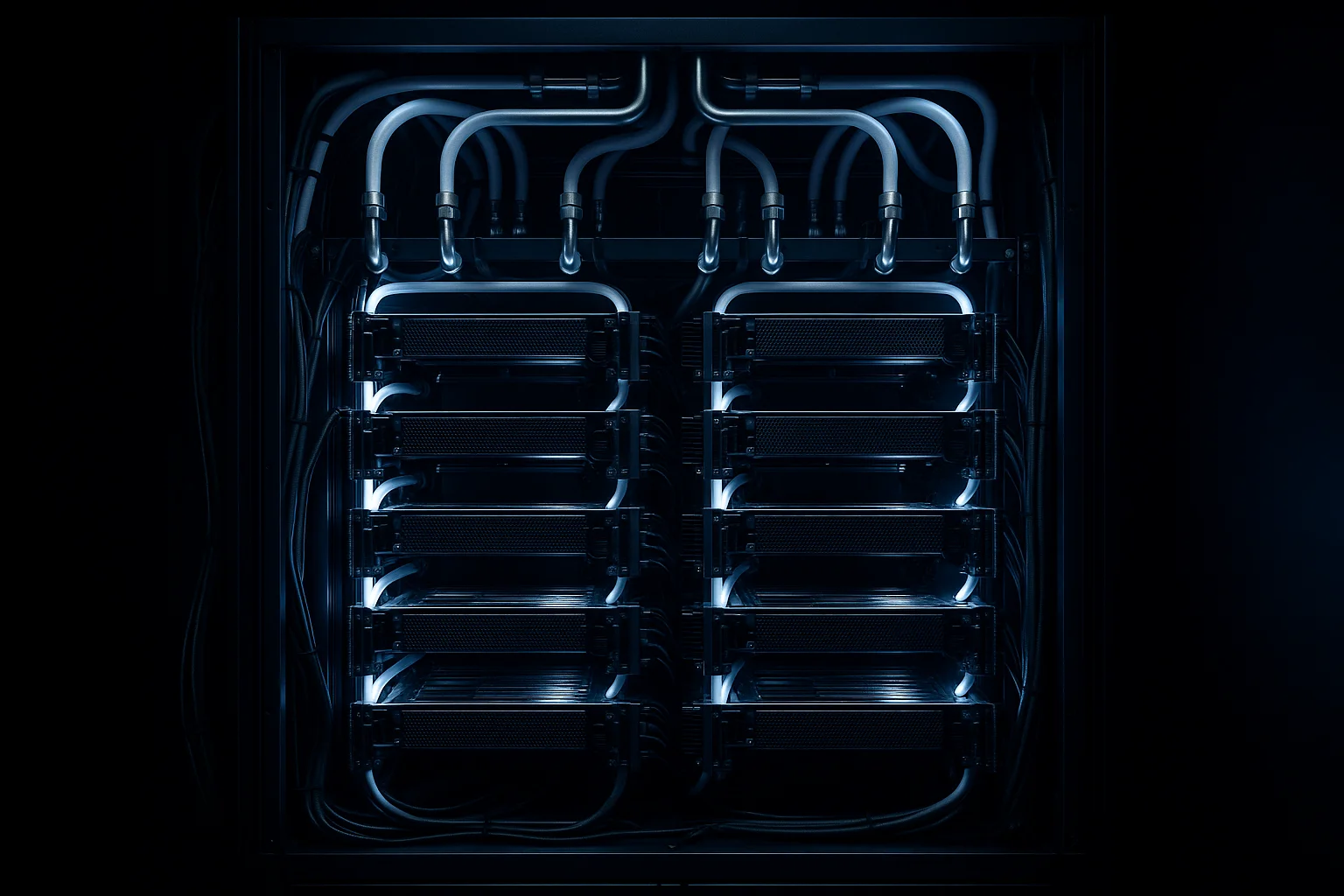
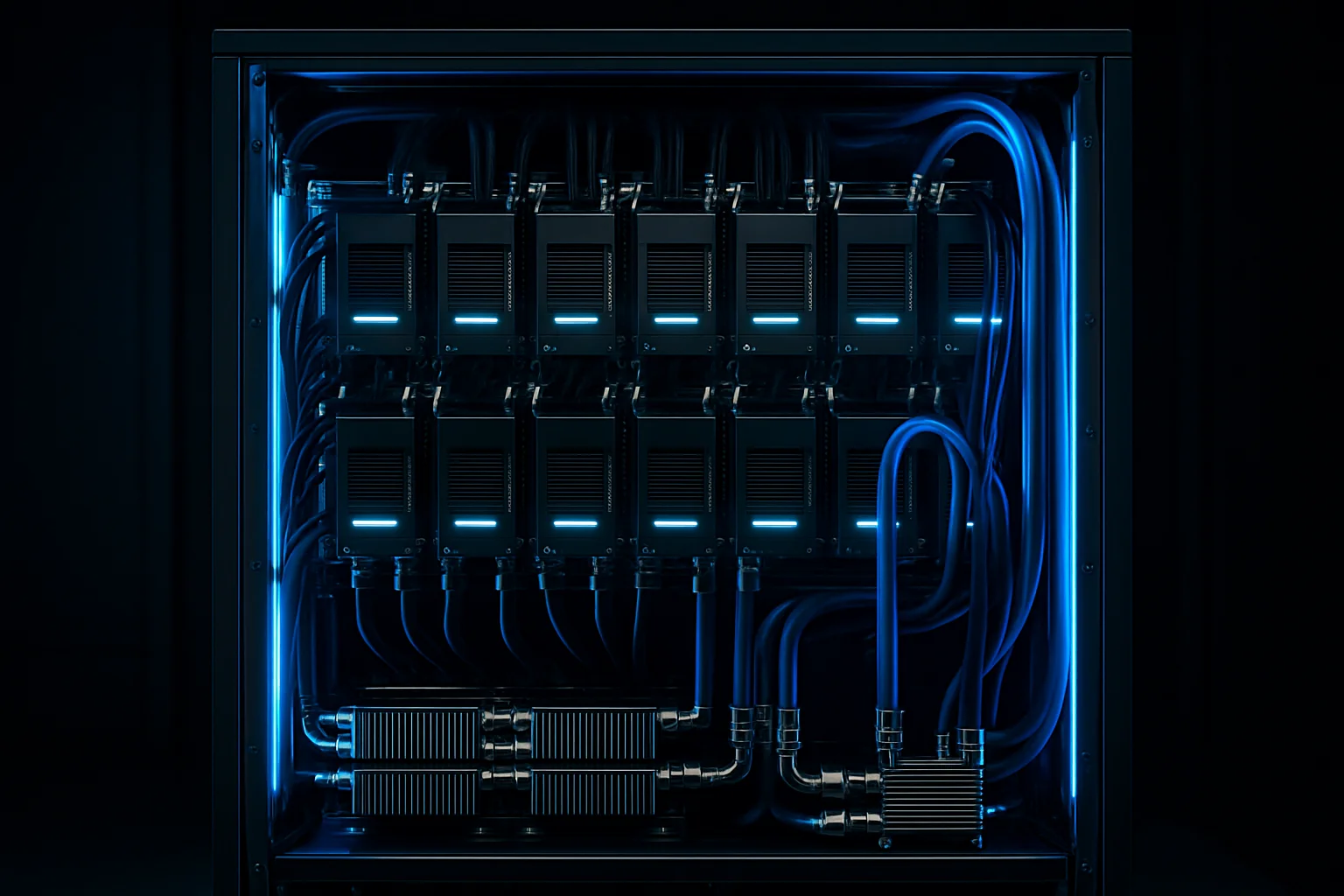
Direct-to-chip liquid cooling routes coolant through cold plates mounted directly on the processor and GPU dies. Heat transfers into the liquid at the source, before it ever becomes hot air that your CRAC units have to fight. The warm coolant goes to a heat exchanger, the heat gets rejected to the outside, and the loop runs again.
This is how you support 120kW per cabinet without turning your data hall into a sauna. IDACORE East is built around direct-to-chip liquid cooling at exactly that density — 120kW per cabinet across 40 cabinets in Phase 1, scaling to 20MW at full build.
The efficiency gains from free air cooling and the per-rack capability of liquid cooling aren't in competition. They work together. Free air cooling handles facility-level heat rejection efficiently. Liquid cooling handles the extreme per-rack densities that modern GPU clusters actually require.
The Real Cost of Getting the Climate Wrong
Let's put numbers on this. Assume a 1MW AI compute deployment.
| Scenario | Annual PUE | Cooling Overhead | Power Cost Difference (at $0.07/kWh) |
|---|---|---|---|
| Right climate, free air + liquid cooling | 1.10 | 100kW overhead | Baseline |
| Marginal climate, mechanical cooling dominant | 1.45 | 450kW overhead | +$245K/year |
| Hot climate, full mechanical cooling | 1.65 | 650kW overhead | +$385K/year |
That's not a rounding error. At 1MW IT load, the difference between a 1.10 PUE site and a 1.45 PUE site is a quarter million dollars per year in power cost alone — before you factor in the capital cost of the additional cooling infrastructure the operator had to build.
Idaho Power commercial rates in the region run around $0.055/kWh. That's roughly half the national average, and it compounds the PUE advantage. Lower base rate, less overhead power wasted on cooling. Both numbers move in your favor.
What "2N Power" Has to Do With Cooling Reliability
One more thing that gets glossed over in colocation marketing: backup power configurations matter for cooling continuity, not just compute uptime.
Most facilities run N+1 or 2N UPS with generator backup. Generator backup means there's a switchover gap — typically 10 to 30 seconds — when utility power fails. For a dense GPU cluster running at 120kW per cabinet, that's 10 to 30 seconds with no active cooling. At those thermal densities, that's not nothing.
IDACORE East runs true 2N power: an independent grid source plus gas generation operating in parallel, not as a failover. There's no switchover event. Power — and therefore cooling — is continuous.
The distinction matters more at high density than it ever did for traditional server workloads. A 1U web server can coast through a 20-second gap. An H100 cluster running flat out cannot.
Frequently Asked Questions
What outside temperature does free air cooling stop working for data centers?
Most free air cooling systems use an economizer switchover point between 55°F and 65°F depending on design and humidity. Above that threshold, the facility falls back on mechanical cooling — compressors, chillers, or DX units. If your site hits those temps for 4+ months a year, your annual PUE climbs fast, and the efficiency gains you planned around disappear.
What PUE can I expect from a data center that uses free air cooling?
A well-designed free air cooling facility in the right climate can hit a PUE of 1.10 to 1.15 annually. IDACORE East targets ~1.10 using free air cooling available roughly 8 months per year in Eastern Oregon. Sites that claim sub-1.2 PUE but operate in warm or humid climates should be asked to show monthly PUE data, not just an annual average.
Can free air cooling handle GPU and AI workloads at high power density?
Not on its own. Air cooling — free or mechanical — tops out around 20–30kW per cabinet for GPU clusters before you hit thermal limits. High-density AI workloads like H100 or B200 clusters running at 60–120kW per cabinet require direct-to-chip liquid cooling. Free air cooling can still contribute to facility-level efficiency, but the per-rack cooling mechanism has to be liquid at those densities.
What is direct-to-chip liquid cooling and how does it differ from immersion cooling?
Direct-to-chip liquid cooling runs coolant through a cold plate mounted directly on the processor die, removing heat at the source before it ever becomes hot air in the room. Immersion cooling submerges entire servers in dielectric fluid. Direct-to-chip is easier to service, compatible with standard rack form factors, and the dominant approach for hyperscale GPU deployments. IDACORE East supports 120kW per cabinet using direct-to-chip liquid cooling.
Is Eastern Oregon a good climate for data center free air cooling?
Yes. Eastern Oregon has a high desert climate with cool nights, low humidity, and moderate summer temperatures — conditions that support economizer operation for roughly 8 months per year. That's meaningfully better than coastal Pacific Northwest sites that deal with humidity issues, or Southwest sites that run hot from May through October. Combined with low-cost power from Idaho Power-adjacent regional grids, it's one of the better climates in the western US for efficient AI colocation.
If you're sizing an AI or HPC deployment and want to see how IDACORE East's climate, cooling infrastructure, and $250/kW all-in pricing actually pencil out against your current or projected costs, talk to our infrastructure team — we'll work through the numbers with you directly.