A 1MW minimum at IDACORE East means roughly 8-9 cabinets at the planned 120kW per cabinet density — enough for a serious H100 or GB200 cluster, not a test rack. The site is pre-leasing via LOI now, targeting Q4 2026, with pricing at $175/kW/month base plus utility pass-through at cost.
Why Does GPU Colocation Need a 1MW Minimum?
If you've priced out colocation for a handful of GPU servers, a 1MW minimum probably sounds aggressive. It is. But it's aggressive on purpose, and the reasoning comes down to physics and site economics, not arbitrary gatekeeping.
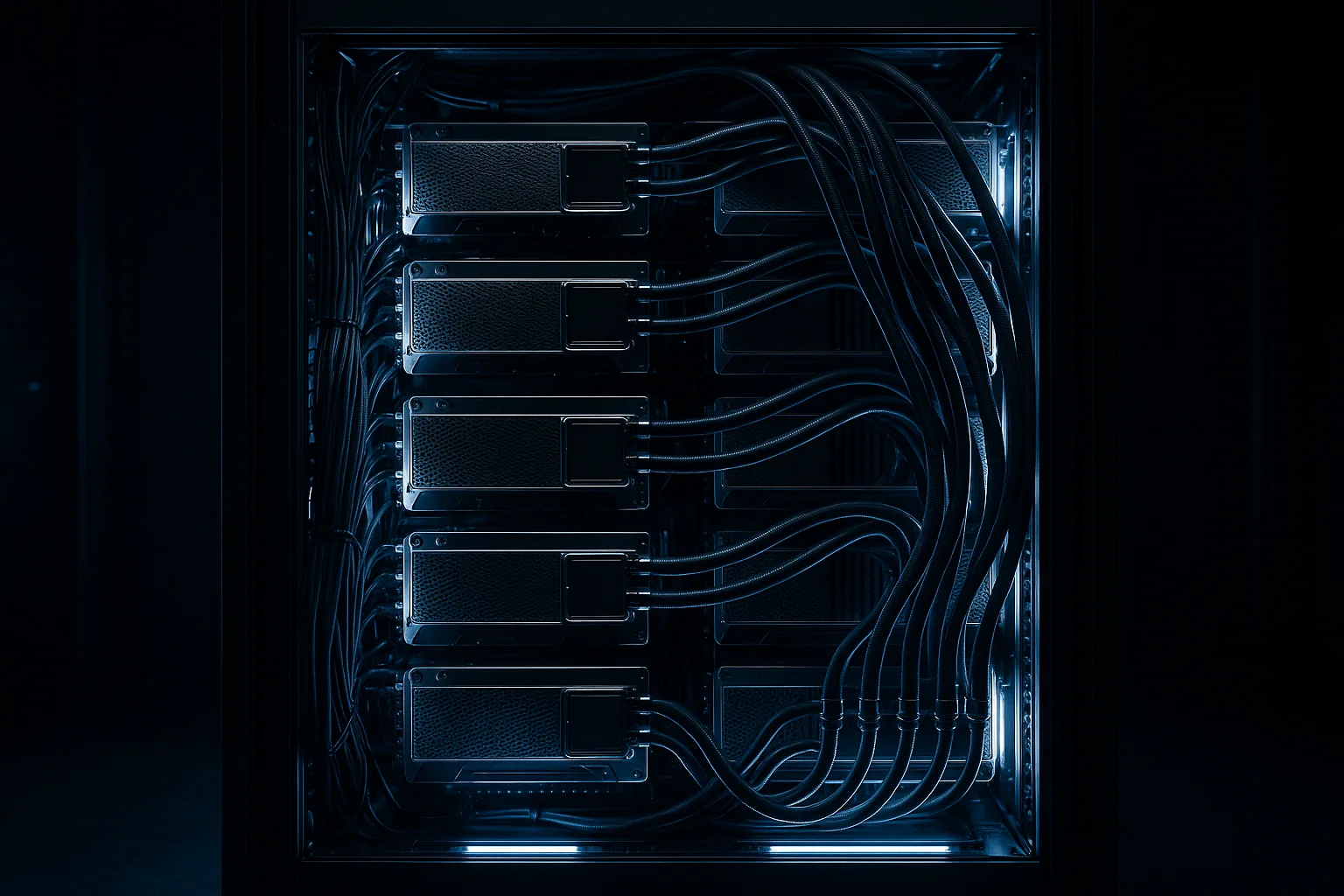
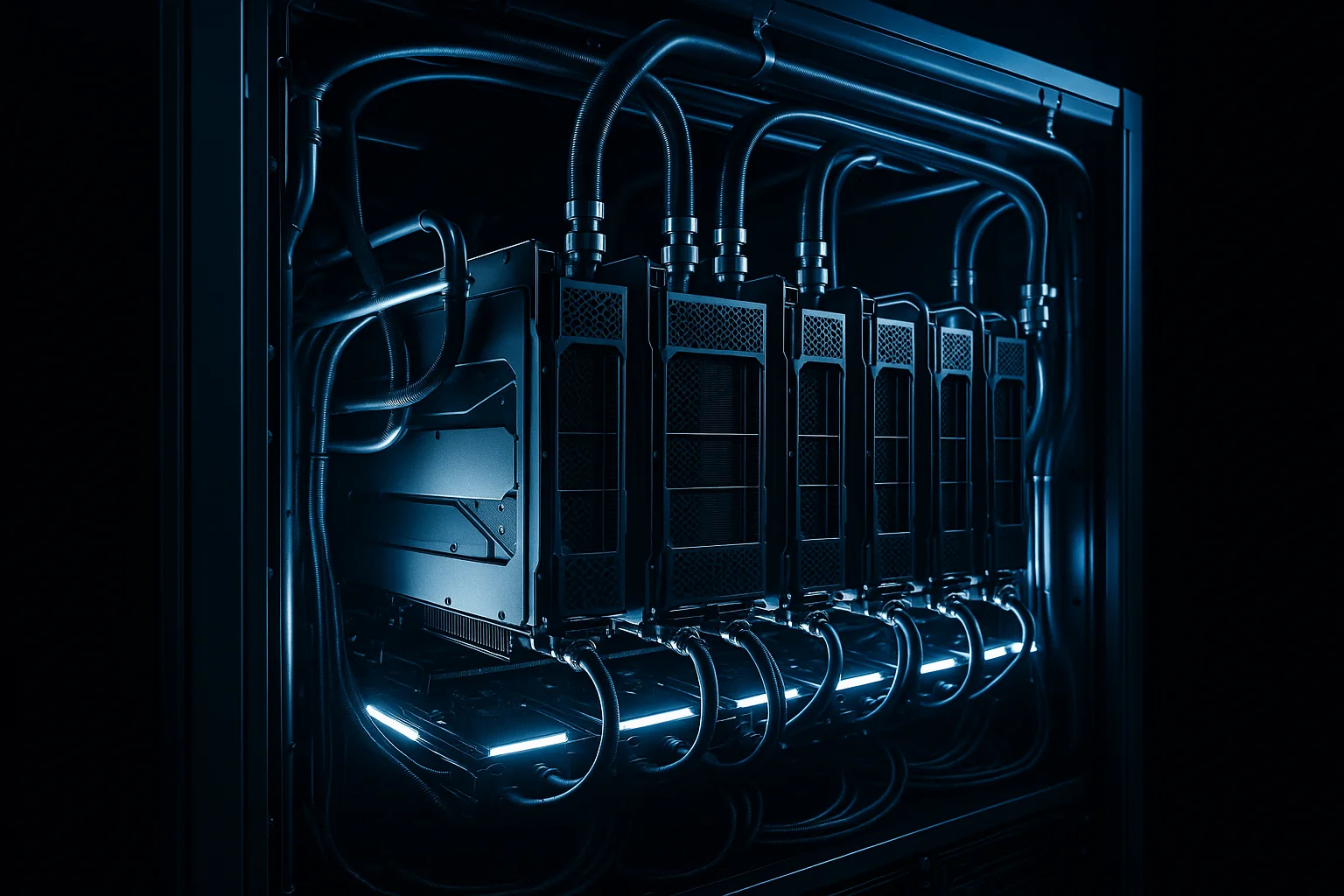
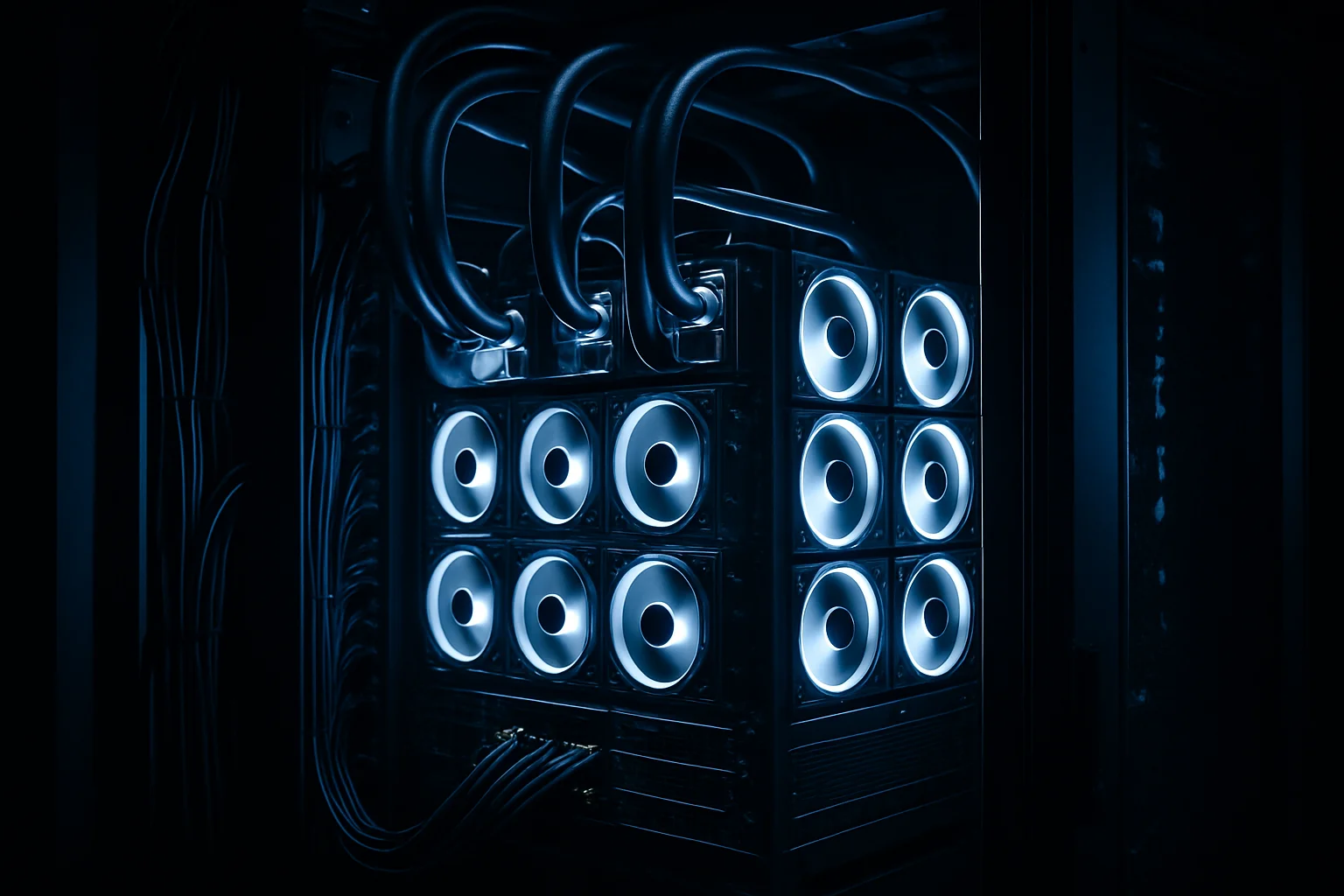
Modern GPU clusters running training workloads — think H100 or GB200 pods — don't sip power. A single DGX H100 system pulls somewhere around 10.2kW under load. Stack enough of those to build a cluster that actually does useful training work, and you're at megawatt scale before you know it. IDACORE East is designed around that reality: direct-to-chip liquid cooling engineered for 120kW per cabinet, which is a density number that only makes sense if you're building for AI/HPC from the ground up, not retrofitting a legacy enterprise data hall.
The 1MW floor also reflects what it takes to justify the infrastructure investment: independent grid interconnection plus gas generation for true 2N power, five diverse fiber routes across two physical entry points, and liquid cooling loops sized for six-figure-watt cabinets. That's not infrastructure you build for a 50kW customer. If your workload is smaller, IDACORE Boise or IDACORE North — both live today at $300/kW/month with no power minimum — are the right fit. East is purpose-built for the buyer who's already thinking in megawatts.
What Does 1MW Actually Buy You?
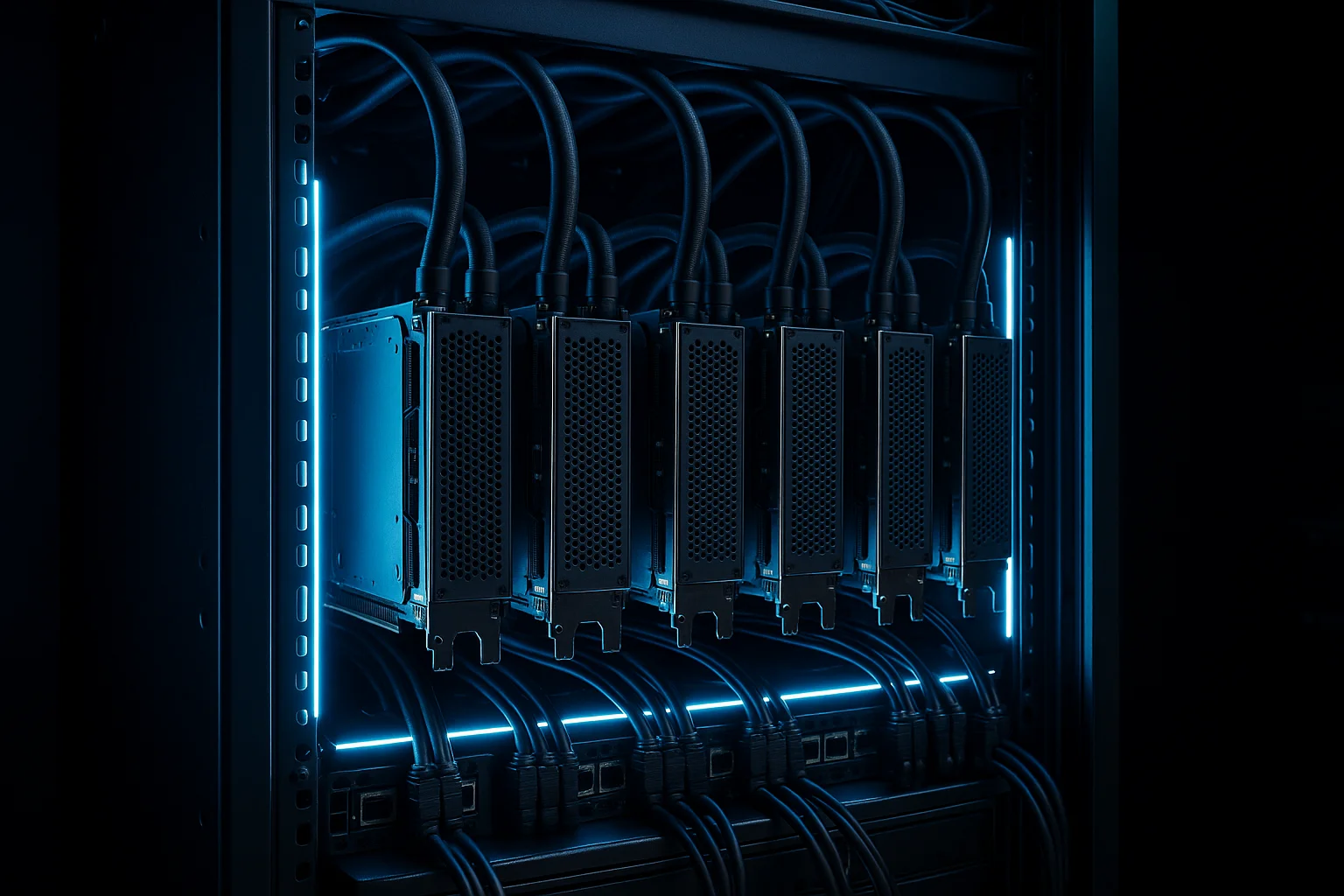
Let's size it concretely. At 120kW per cabinet, a 1MW IT load gets you roughly 8 cabinets fully populated, or you can spread that across more cabinets at partial density if your rack layout needs more physical spacing for maintenance access and cabling. Either way, you're looking at a cluster in the range of 80-100 GPUs at H100-class power draw, which is enough to run meaningful pretraining runs or serve large-scale inference for a production AI product — not a proof-of-concept.
What Makes 120kW Per Cabinet Different From Standard Colocation?
Most colocation facilities in the Pacific Northwest — including our own Boise and North sites — are built around air-cooled racks in the 5-15kW range. That's fine for web infrastructure, databases, and general enterprise compute. It is nowhere close to sufficient for GPU-dense AI workloads.
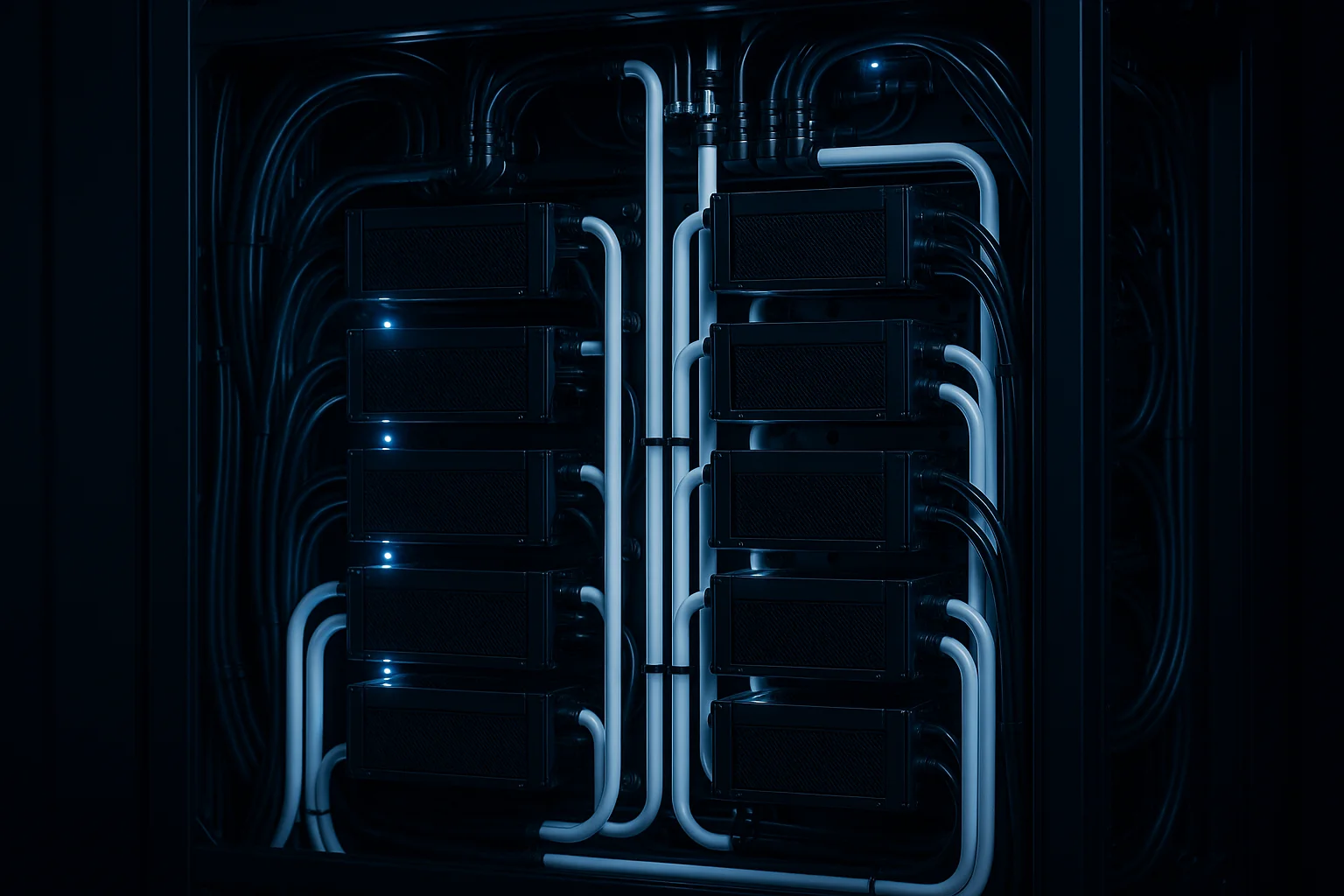
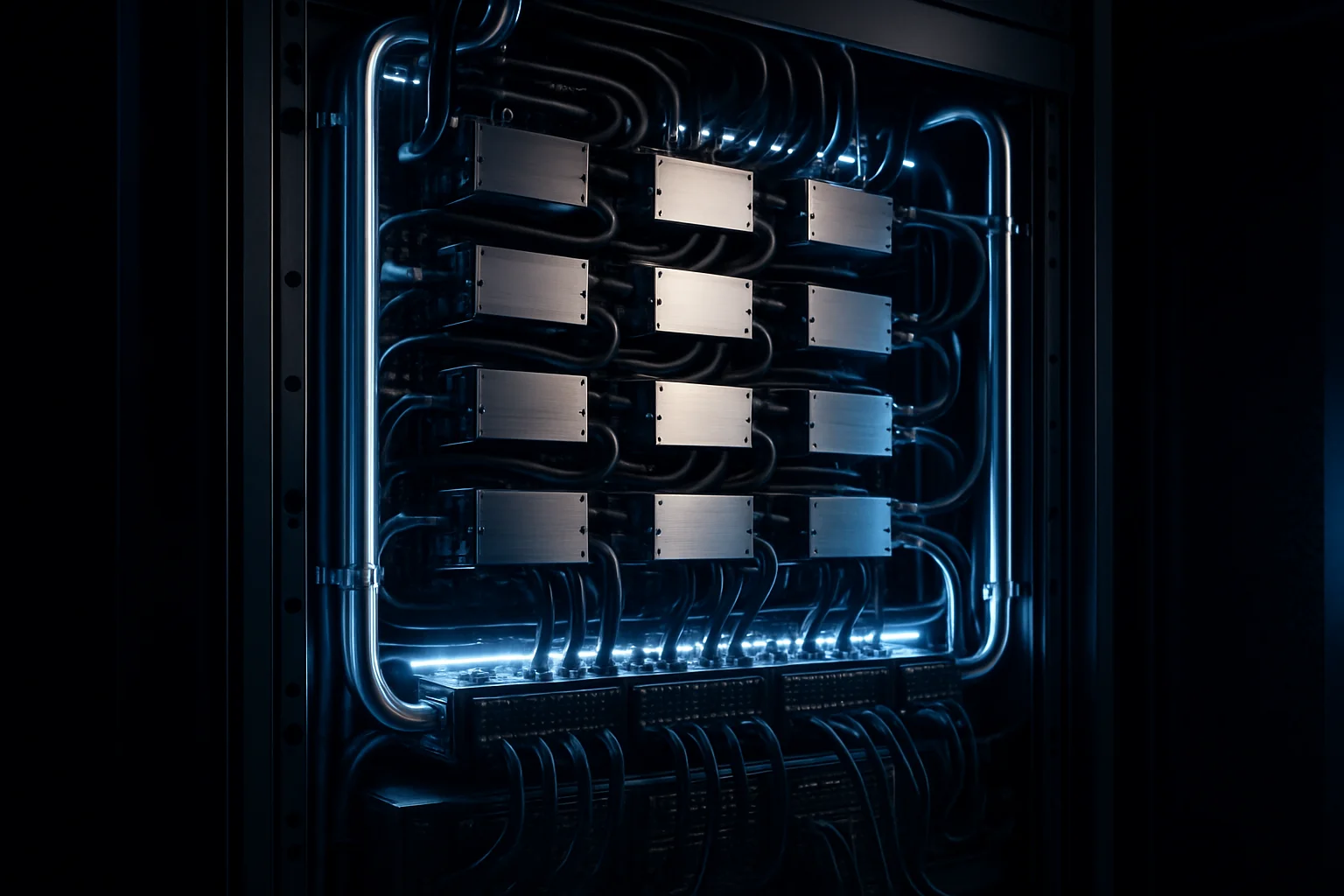
At 120kW per cabinet, air cooling isn't an option. You physically cannot move enough air through a standard cabinet to keep silicon at that density from throttling or failing. IDACORE East is engineered from the slab up for direct-to-chip liquid cooling, which pulls heat directly off the GPU and CPU packages rather than trying to condition an entire room. That's the only cooling architecture that scales to triple-digit kW per cabinet without turning your data hall into a wind tunnel.
The design target for PUE is around 1.10, which is aggressive even by hyperscaler standards. Eastern Oregon's climate helps here — the site is designed to run free air cooling for the mechanical plant roughly 8 months out of the year, cutting the energy overhead that typically comes from running chillers year-round. Compare that to a legacy data center pushing a PUE of 1.4-1.6, and the difference compounds fast at megawatt scale: a 1MW IT load at PUE 1.10 draws about 1.1MW total facility power, while the same load at PUE 1.5 draws 1.5MW. That 400kW gap is money you're paying for every month, indefinitely.
How Does East's Power Design Differ From Standard Backup Architecture?
Most colocation facilities — including plenty that market themselves as "enterprise-grade" — run on utility power with generator backup. That's an N or N+1 model: one power source, with diesel gensets standing by in case of an outage. IDACORE East is designed around true 2N power: an independent grid source paired with gas generation as a second, fully independent supply, not a backup sitting idle waiting for a failure. For a training cluster that might run for weeks on a single job, an unplanned power event isn't an inconvenience — it's a lost run and lost GPU-hours you're paying for either way.
What Will IDACORE East Cost Compared to Hyperscaler GPU Instances?
Pricing transparency is where colocation wins against renting GPU capacity from a hyperscaler, and it's worth putting real numbers next to each other.
| IDACORE East (planned) | Hyperscaler On-Demand GPU | |
|---|---|---|
| Base rate | $175/kW/month + utility at cost | Bundled into hourly instance rate |
| Minimum commitment | 1MW | None, but pricing penalizes non-reserved use |
| Cooling | Direct-to-chip liquid, 120kW/cabinet | Varies, often opaque |
| Power cost basis | Pass-through, no markup | Embedded margin, not disclosed |
| Contract model | LOI pre-leasing, Q4 2026 | Month-to-month or 1-3yr reserved |
At $175/kW/month, a 1MW deployment runs $175,000/month in base facility charges before utility pass-through. Add Eastern Oregon's power costs — the region benefits from the same low-cost hydro and wind generation that makes the broader Pacific Northwest attractive for heavy compute — and you're still well inside the range where owning your GPU capacity outright beats renting it by the hour once utilization climbs above roughly 40-50%, which most serious training workloads blow past in the first month.
The bigger issue with hyperscaler GPU rental isn't the sticker price. It's the unpredictability. On-demand H100 instances get reclaimed, spot pricing fluctuates, and egress fees on the data you move in and out compound on top of compute costs. A flat $175/kW/month plus pass-through utility is a number you can put in a three-year financial model without hedging.
What Should You Do Now If You're Planning a 2026 Deployment?
Q4 2026 sounds far off until you map out the actual GPU procurement timeline. If you're planning a cluster deployment for late 2026, you're likely already in conversations with NVIDIA or your OEM about H100, H200, or GB200 allocation — and those lead times run 6-12 months on their own. Pre-leasing via LOI at IDACORE East lets you lock in power capacity, rack design, and pricing while your hardware order is still working its way through the supply chain, instead of discovering in Q3 2026 that the megawatt of power you need isn't available anywhere in the region.
We're not asking you to sign a blind commitment. The LOI process is designed to let you reserve capacity and work through cabinet layout, power redundancy requirements, and network connectivity — including private transport to IDACORE Boise for hybrid deployments — before the site goes live.
Frequently Asked Questions
What is the minimum power commitment at IDACORE East?
IDACORE East requires a 1MW minimum commitment, priced at $175/kW/month base rate plus utility pass-through billed at cost with no markup. This reflects the site's design for megawatt-scale AI and HPC colocation rather than small-footprint deployments, which are better served by IDACORE Boise or IDACORE North.
When will IDACORE East be operational?
IDACORE East is currently pre-leasing via Letter of Intent (LOI), targeting Q4 2026 for Phase 1 availability. Phase 1 is designed for 5MW of IT load across 40 cabinets, with the full build-out planned to reach 20MW.
What cooling does IDACORE East use for high-density GPU racks?
IDACORE East is designed around direct-to-chip liquid cooling engineered to support up to 120kW per cabinet. This is a fundamentally different architecture from air-cooled colocation, and it's necessary because standard air cooling cannot dissipate heat at GPU-cluster densities.
How does IDACORE East's power design differ from standard backup power?
IDACORE East is planned around true 2N power — an independent grid source combined with gas generation as a fully independent second supply, not generator backup sitting idle. This is designed to reduce the risk of power events interrupting long-running training jobs.
Can I connect IDACORE East to IDACORE Boise for a hybrid deployment?
Yes. IDACORE plans to offer private transport between IDACORE East and IDACORE Boise for customers running hybrid architectures — for example, training at East and serving inference or handling application workloads from Boise. This is private transport, not dark fiber, and connectivity details are finalized during the LOI process.
Eastern Oregon's power economics and IDACORE's true 2N design won't wait for the hardware market to catch up — if a 2026 GPU cluster deployment is on your roadmap, get in touch about pre-leasing at IDACORE East and lock in your megawatt allocation while Phase 1 capacity is still available.