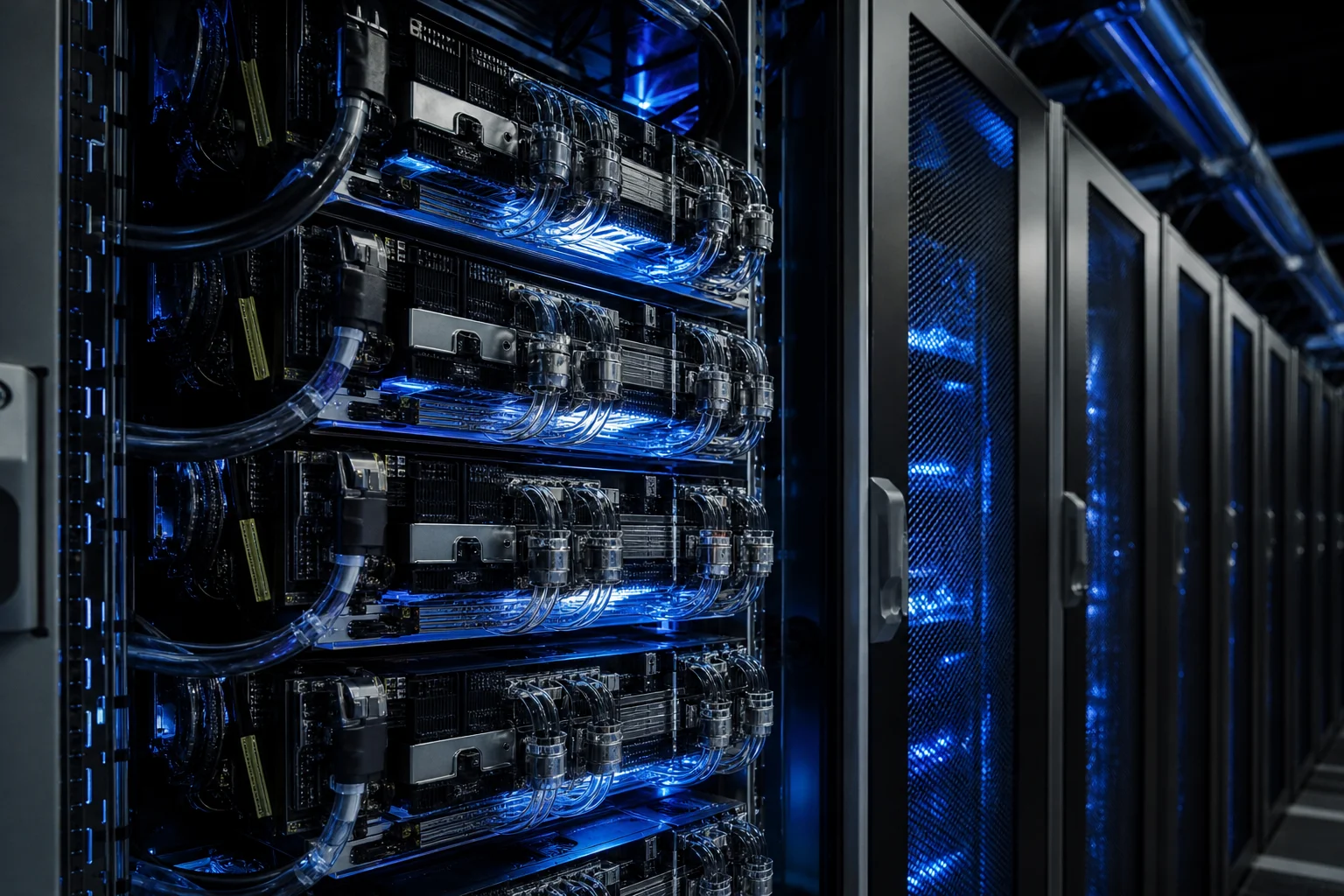
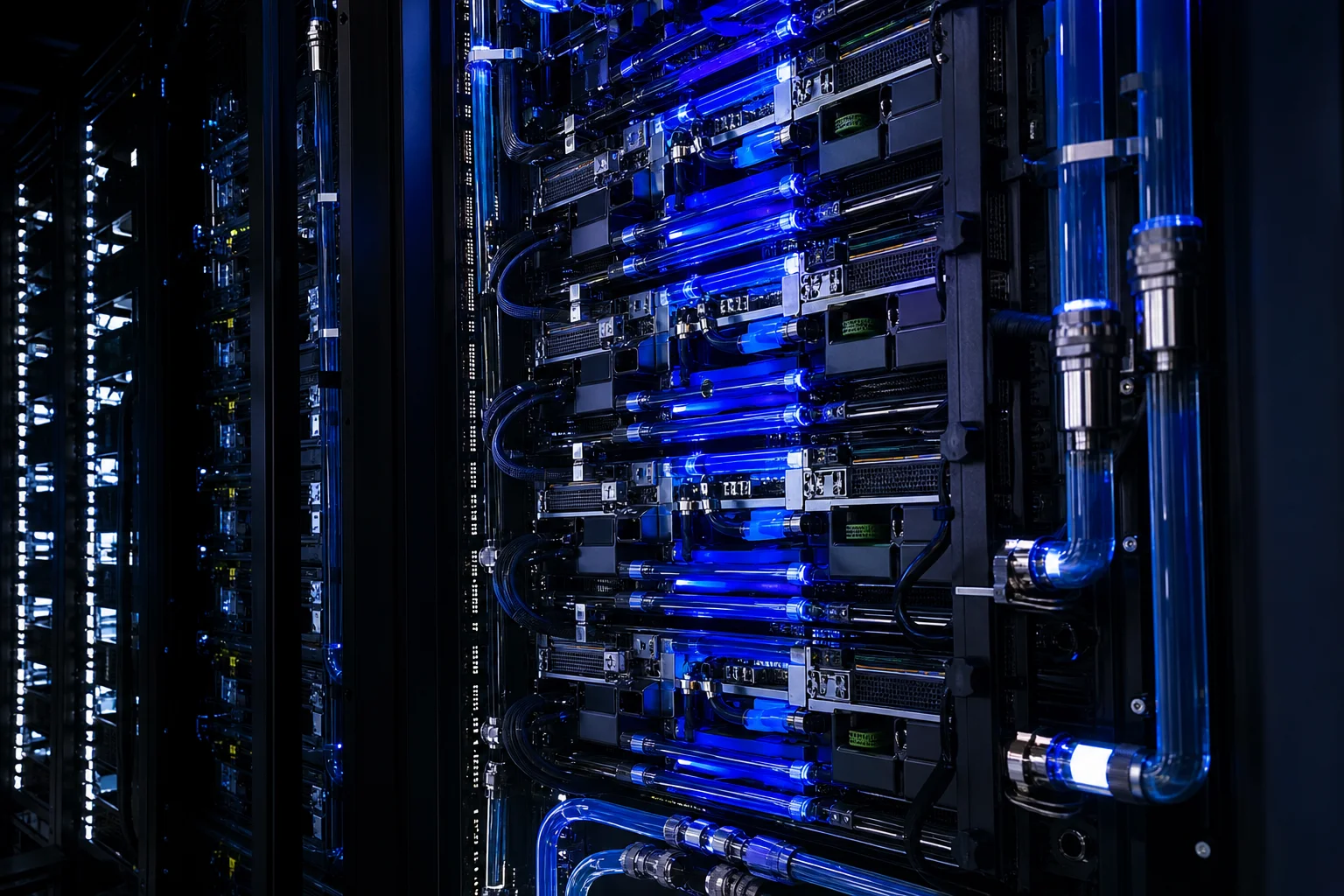
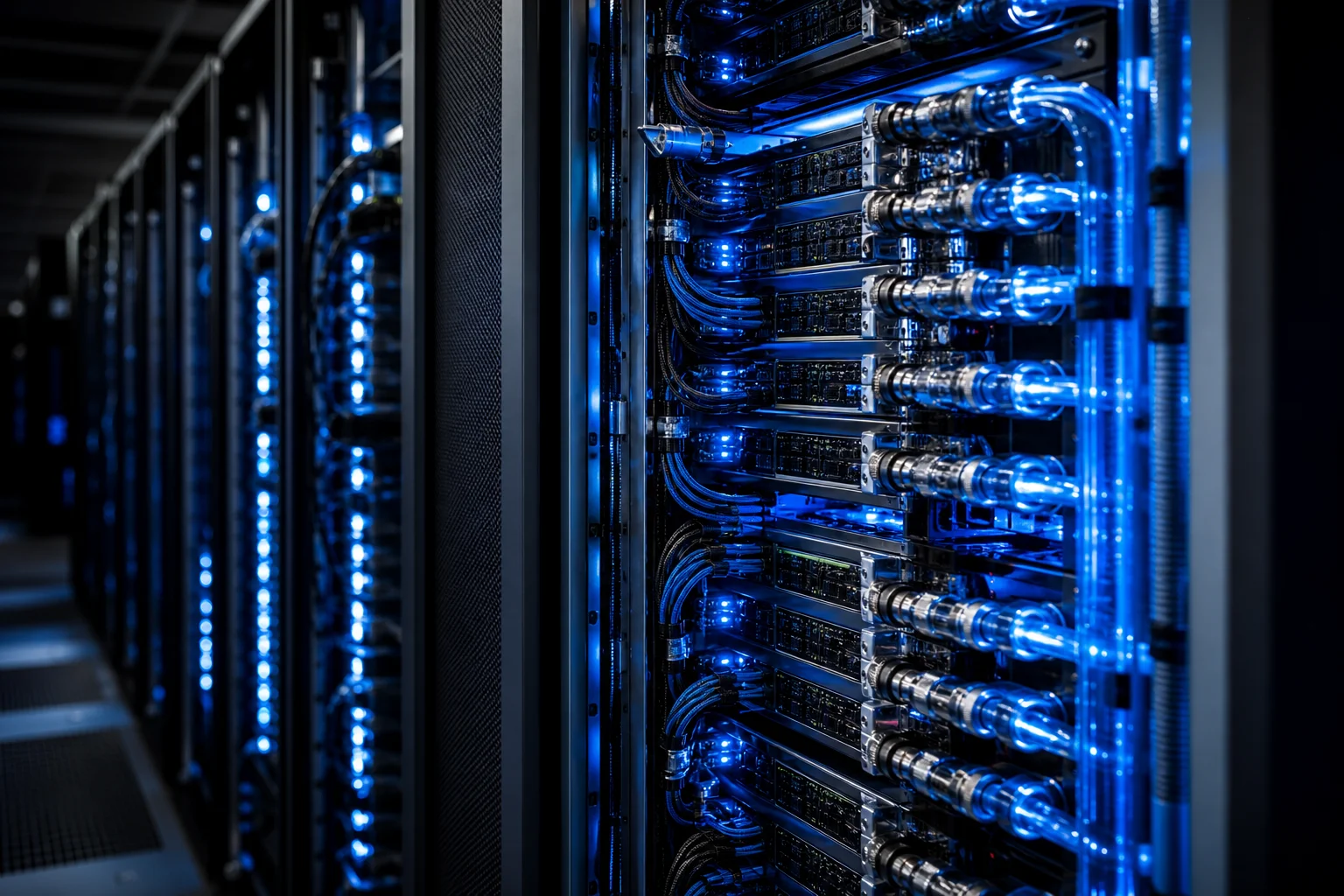
A 1MW GPU Depot wins a small town by asking for almost nothing. IDACORE Depots are sited on power the utility already has, so they need no new substation and make no tax-break request. Each one is built from two roughly 500kW modules. The town gets modern infrastructure, local jobs, and training without straining its grid or its budget.
Why Does a Town Fight a Hyperscale Campus but Welcome a Depot?
You've seen the headlines. A big developer shows up in a rural county with a campus plan measured in hundreds of megawatts. It asks for a multi-decade tax abatement. Then it waits while the utility builds a new substation and upgrades transmission before a single server gets energized. The commission meeting fills up. Residents ask who pays for the grid upgrades, what the noise will be like, and whether their own rates go up. Sometimes the project dies. Sometimes it drags through years of permitting and hearings.
We built IDACORE Depots to skip that fight entirely. We didn't do it by being better at lobbying. We did it by being small enough that there's nothing to fight about.
A Depot is a purpose-built compute site of 5MW or less, typically about 1MW of IT load. That's two Compute Modules of roughly 500kW each, either containerized or in a simple steel building. We put them where the utility already has capacity available. There's no new substation, no years-long utility construction project, and no ask for the town to subsidize us.
That changes the conversation. A 1MW load on an existing feeder is a utility customer, not a regional grid event. Utilities like steady, predictable load that pays its bill. The town gets a tenant that looks more like a light industrial user than a megaproject. Sound like something a county commissioner can say yes to? It is.
How Does Siting on Existing Utility Power Speed Up Energization?
The single biggest delay in large-scale compute builds isn't construction. It's power. If your project needs a new substation, you're on the utility's timeline, and that timeline is measured in years.
Depots flip that. We start from where power already exists and design the site to fit it. IDACORE takes a utility primary feed into our own transformer and steps it down to 415V. From there it runs to 48-inch-deep cabinets with A+B PDUs (C13/C19 outlets). The electrical scope is a transformer pad and distribution, not a substation.
Cooling is just as stripped down. Each Compute Module uses cross-flow free-air cooling. Outside air comes in through louvers and MERV 13 filtration, crosses the servers, and exits the far side. In summer, a direct evaporative wet wall takes over the heavy lifting. There are no compressors and no chillers. The louvers, recirculation, and wet wall are fully automated. The design-target PUE is roughly 1.1-1.2. That number matters to you because power bills at cost times PUE.
This isn't a rendering. Depot 01 in Northeast Washington is live now. It's energized and air-cooled, with capacity up to 50kW per rack. That's room for three 8-GPU HGX B200-class servers in one cabinet. Racks are powered in under two weeks from signing, backed by a 99.9% uptime SLA. IP transit from our own AS36824 is delivered on-site, with BGP, IPv4/IPv6, 1G/10G/100G handoffs, and burstable 95th-percentile billing.
Here's how the two models compare on the things a town and a customer both care about:
| Factor | Typical hyperscale campus | IDACORE Depot |
|---|---|---|
| IT load per site | Hundreds of MW | 5MW or less, typically ~1MW |
| New substation required | Commonly, yes | No, sited on existing utility power |
| Time to energize | Years, gated by grid upgrades | Depot 01 racks powered in under 2 weeks from signing |
| Tax incentive requests | Common | None |
| Mechanical cooling | Chillers and compressors are common | No compressors or chillers; free air plus wet wall |
| Physical footprint | Large multi-building campus | Two ~500kW modules, containerized or simple steel building |
| Failure model | Gold-plate the single site | Resilience across many sites |
The hyperscale column describes typical market patterns, not any specific operator. The point isn't that big campuses are wrong. It's that they solve a different problem, and they bring a different set of asks to the towns that host them.
What Does a Small Town Get If Not a Tax Deal?
This is where we're opinionated. If your business model only works because a rural county waives its property taxes for twenty years, your business model is the problem. We don't ask for abatements. A Depot has to stand on its own economics, and it does, because it skips the substation and the gold-plated mechanical plant.
What we bring instead:
- Community contributions. We put money and effort into the places that host us, directly, rather than negotiating it as a condition of approval.
- Training. Running GPU infrastructure takes skills that small towns rarely get exposure to: high-density power distribution, airflow management, network operations, hardware swaps. We teach them.
- Events. Tech nights, hands-on sessions, and open conversations about what the site does and how it works, brought to town by IDACORE.
- Local jobs. Every Depot needs people on the ground for remote hands, facility maintenance, and electrical work. Those jobs belong in the town, not in a ticket queue three states away.
- Modern infrastructure without the strain. A 1MW site on existing capacity doesn't force grid upgrades that ratepayers end up funding. And it puts diverse IP transit in places that often don't have much of it.
Community work isn't new for us. IDACORE already hosts IdahoMesh MeshCore repeaters, part of the volunteer-built mesh radio network. We've been in this region for 30 years, starting with an ISP we founded and ran with our own ASN and BGP peering at the Seattle Internet Exchange. Local infrastructure is how we got here.
The quiet benefit is noise. There's no chiller plant and no rooftop full of compressors cycling all night. The site is moving air through filters and servers. That's a much easier conversation with the neighbors.
Why Build Many Small Depots Instead of One Gold-Plated Campus?
Cattle, not pets. If you've run fleets of servers, you already know the philosophy. You stop treating individual machines as precious and design the system so any one of them can fail without drama.
We apply that to sites. No single Depot is gold-plated. The platform is resilient as a whole, and you pay for the resilience you need instead of a fixed bundle you can't opt out of.
The base Depot offering is utility-fed, with no UPS and no generator. It's the lowest-cost tier. That's a deliberate choice, not a corner cut, and it fits a lot of GPU inference work. Inference fleets typically sit behind load balancers and already route around failed nodes. Paying for 2N power on every rack is wasted money for those workloads. When you do need more, backup power is available as an add-on, either UPS plus generator or battery energy storage (BESS). Or you can spread across multiple Depots for site-level redundancy. Pick the resilience you need.
The economics are just as plain. Depots are $175/kW/month NNN plus power at cost on a 36-month term. The $175 covers space, cooling, and facility infrastructure. Power bills on top as metered IT load times PUE at the utility rate, with no markup. 12- and 24-month terms are available at a higher rate. There's no minimum deployment size. The deposit and first month are due at signing.
Here's a concrete example. An inference startup takes one 50kW rack at Depot 01 for three 8-GPU servers:
- Facility charge: 50 kW × $175 = $8,750/month NNN
- Power at cost: at full draw, 50 kW × 730 hours = 36,500 kWh of IT load. At a design-target PUE of 1.1-1.2, that's roughly 40,150-43,800 kWh billed at the utility's rate, with no markup.
- Separately billed: IP transit, any backup power add-on, and remote hands at $150/hr during business hours (15-minute increments) or $250/hr after hours (1-hour minimum)
Most power-cycling never touches remote hands. You reboot your own gear from the IDACORE portal.
There's one more advantage, and it's harder to put in a table: agility. Big providers move on quarterly planning cycles. We're operators who run our own network and our own sites. When you call, you get someone who knows what's in your rack.
Next Depots are planned for the Treasure Valley and Eastern Oregon. They'll connect back to our Boise interconnect hub over metro fiber. Dark fiber between Depots is a long-term plan, not something that exists today. For what's open right now, check idacore.com/depots.
Frequently Asked Questions
Do IDACORE Depots need a new electrical substation?
No. IDACORE sites each Depot where the utility already has power available, so there's no new substation and no years-long utility construction project before energization. A Depot is 5MW or less, typically about 1MW of IT load built from two roughly 500kW Compute Modules. IDACORE takes a utility primary feed into its own transformer and distributes 415V to the racks. That's why Depot 01 in Northeast Washington is energized today instead of waiting on grid upgrades.
Does IDACORE ask local governments for tax breaks to build a Depot?
No. IDACORE Depots don't ask for tax abatements or incentive packages. The model depends on being small: about 1MW of load on existing utility capacity, no new substation, and no strain on the local grid. Instead of a tax deal, IDACORE brings community contributions, technical training, and events to the towns that host Depots, along with modern infrastructure and local jobs. IDACORE also already hosts IdahoMesh MeshCore repeaters as part of its community work.
How much does GPU colocation cost at an IDACORE Depot?
IDACORE Depots are $175/kW/month NNN on a 36-month term, covering space, cooling, and facility infrastructure, plus power at cost. Power bills as metered IT load times PUE at the utility rate, with no markup. The design-target PUE is about 1.1-1.2. 12- and 24-month terms are available at a higher rate, and there's no minimum deployment size. Backup power, IP transit, transport, and remote hands are billed separately. Remote hands run $150/hr during business hours.
Where is IDACORE Depot 01 and how fast can I get racks powered?
Depot 01 is in Northeast Washington and it's live now. It offers energized, air-cooled capacity up to 50kW per rack, enough for three 8-GPU HGX B200-class servers. Racks are powered in under two weeks from signing, backed by a 99.9% uptime SLA, with IP transit from IDACORE's AS36824 delivered on-site. The next Depots are planned for the Treasure Valley and Eastern Oregon. Check idacore.com/depots for current availability.
Do IDACORE Depots have UPS and generator backup?
The base Depot offering is utility-fed, with no UPS or generator. That keeps it the lowest-cost tier. If your workload needs more, backup power is available as an add-on: UPS plus generator, or battery energy storage (BESS). You can also spread deployments across multiple Depots for site-level redundancy, which suits inference fleets that already load-balance across locations. You pick the resilience you need and don't pay for gold-plating you won't use.
If you're tired of waiting on substation timelines to deploy GPUs, Depot 01 is energized and powering racks in under two weeks from signing. Tell us your rack count and power draw, and we'll show you what it looks like at $175/kW/month NNN plus power at cost. Get your GPU racks powered at Depot 01.