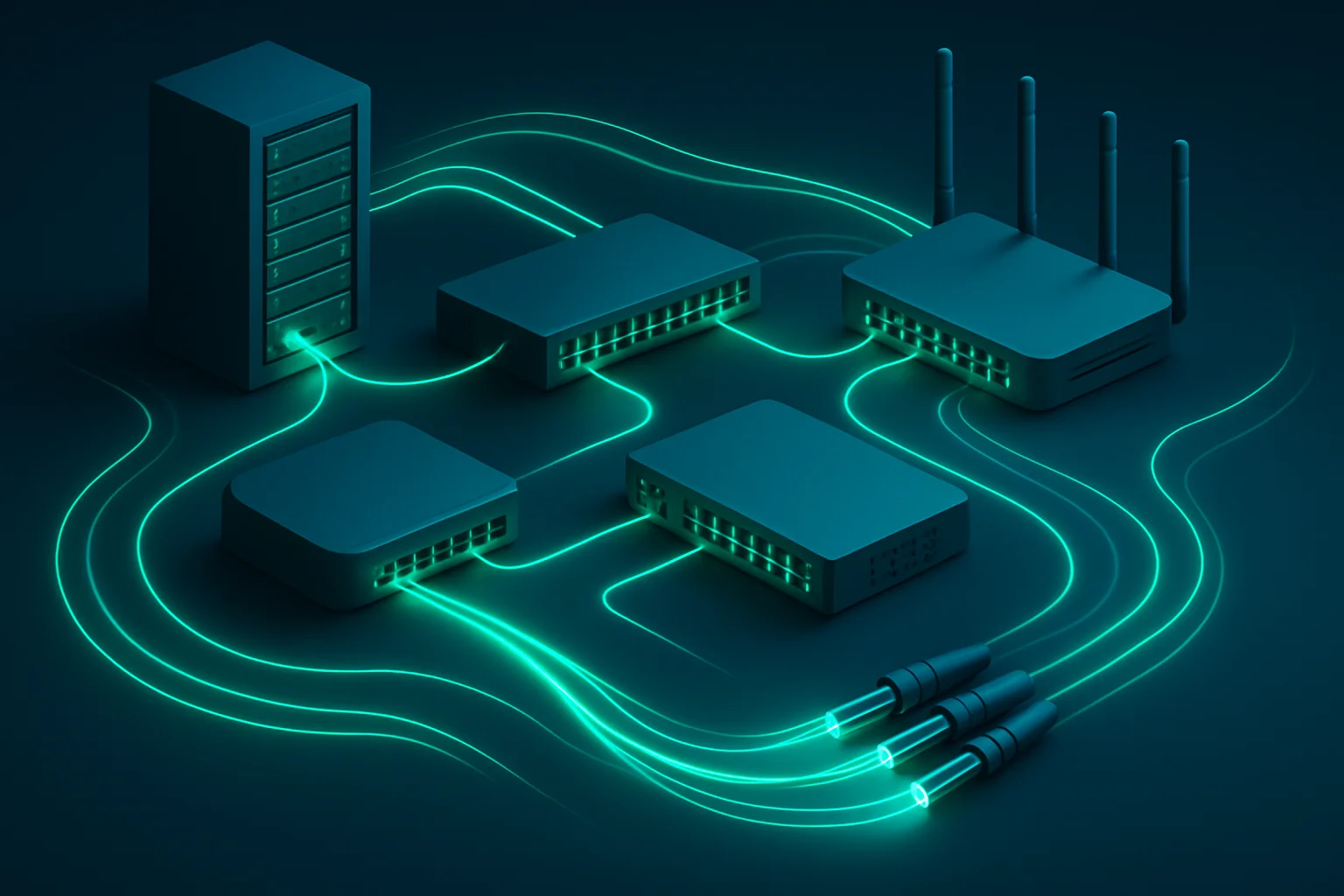
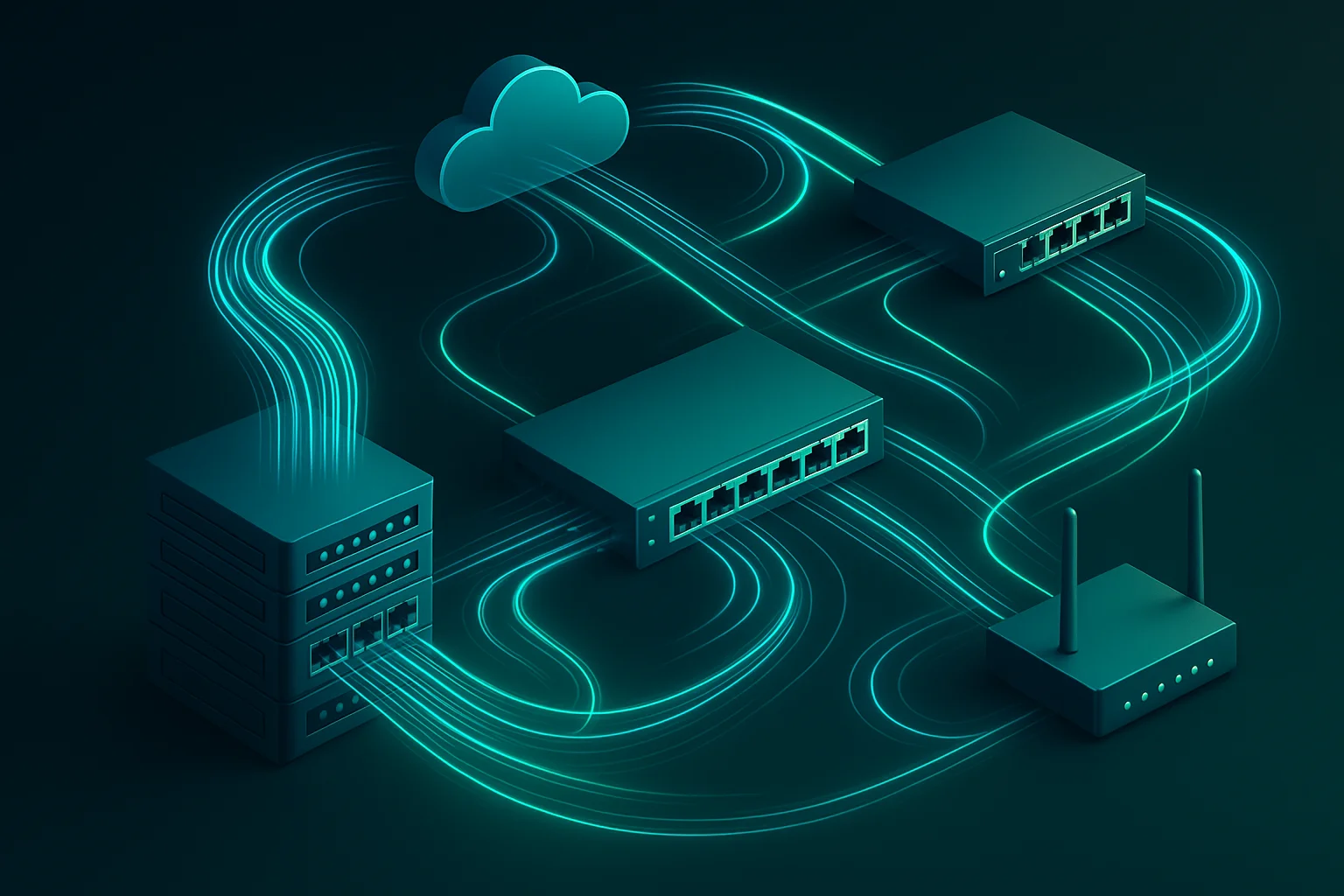
Running your own ASN in Boise means multi-homed BGP across 7 on-net carriers — Zayo, Lumen, Cogent, CenturyLink, Syringa, Cable One, and Hurricane Electric — with transit billed on committed bandwidth at 95th percentile, not metered egress. You get route control, failover in seconds, and predictable per-Mbps pricing starting at $170/month for 100M.
Why Does On-Net Carrier Diversity Matter More Than Bandwidth Volume?
Most colocation providers sell you a rack and point you at whatever single carrier they've got a deal with. That's not multi-homing — that's a single point of failure with a service contract attached. If that carrier has a fiber cut, a route leak, or a peering dispute upstream, your traffic sits there until they fix it. You have no say in the matter.
We built IDACORE Boise different because I ran an ISP for over a decade. I've peered at the Seattle Internet Exchange, filed my own ASN with ARIN, and spent nights chasing down route flaps at 3 AM. When you're multi-homed across seven on-net carriers — Zayo, Lumen/Level 3, Cogent, CenturyLink, Syringa, Cable One, and Hurricane Electric — you're not hoping one provider stays up. You're running BGP and choosing your paths in real time.
That's the difference between "we have internet" and "we have a network." Syringa gives us regional Idaho routes that the national carriers don't bother optimizing. Hurricane Electric gives us deep peering at IX points most small operators never touch. Cogent and Zayo give us cost-effective transit for bulk traffic. You blend all of it, and BGP picks the best path for every destination, every time.
What Does Multi-Homing Actually Buy a Colocation Customer?
Say you're running a SaaS platform out of a half-cabinet in Boise. Your primary route goes out over Zayo. Zayo has a maintenance window or a fiber cut on I-84 — it happens, this is Idaho, not Manhattan. With single-homed transit, you're down until they reroute. With BGP multi-homing across our on-net carriers, your announcements get withdrawn from that path and reconverge through Lumen or CenturyLink in under a minute. Your customers might see a blip. They won't see an outage.
This isn't theoretical. We've had customers ask us to prove failover during onboarding — we'll walk you through a controlled carrier failover test before you sign anything long-term. Try asking a hyperscaler to do that.
How Does 95th Percentile Billing Actually Work?
This trips people up who've only ever seen flat-rate transit or cloud egress bills. Here's the mechanics: we sample your bandwidth usage every 5 minutes, throw out the top 5% of samples (that's the "95th percentile" part — it forgives brief bursts), and bill you on whatever's left as your effective peak.
Practically, this means a single traffic spike from a marketing campaign or a DDoS attempt doesn't blow up your bill. You're billed on sustained usage, not momentary peaks. That's fundamentally different from cloud egress billing, where every gigabyte out the door costs you, no matter how it got there.
Committed Bandwidth Tiers at IDACORE Boise
| Commit Tier | Monthly Price | Effective Rate |
|---|---|---|
| 100M | $170/mo | $1.70/Mbps |
| 1G | $600/mo | $0.60/Mbps |
| 10G | $2,000/mo | $0.20/Mbps |
| 100G | $11,050/mo | $0.111/Mbps |
Compare that to AWS data transfer out, which runs $0.05–0.09/GB depending on volume tier — and that's per gigabyte, not per Mbps of capacity. A company pushing 5TB/day of egress off an EC2 instance is paying somewhere in the $7,500–$13,500/month range, with zero predictability if traffic grows. Move that same workload to a 10G commit at IDACORE Boise, and you're at $2,000/month flat, full stop, regardless of whether you push 2TB or 8TB that day — as long as you stay under your sustained peak.
What Does "On-Net" Actually Mean Here?
On-net means the carrier's fiber terminates physically inside IDACORE Boise. No middle-mile handoff, no third-party meet-me room, no extra latency hop while somebody else's cross-connect gets provisioned. When Hurricane Electric is on-net, that means their router is in our facility, and our BGP sessions peer directly.
This matters for latency more than people expect. From Boise, we're seeing sub-5ms round trips to Treasure Valley businesses, 23ms to Seattle, 22ms to Portland, and 14ms to Salt Lake City. That's not marketing math — that's what BGP path selection gets you when you've got seven carriers to choose from and you're picking the shortest AS path for every destination block, not just accepting whatever your one upstream hands you.
Who Actually Needs Their Own ASN?
You don't need your own ASN to buy transit from us — plenty of customers run private IP space behind our routing and never touch BGP configuration themselves. But if you're running infrastructure at any real scale — multiple sites, DR requirements, or you just don't want a single carrier controlling your uptime — running your own ASN with us as an upstream gives you full control over your route announcements. You decide your prefixes, your AS path prepending, your traffic engineering. We just make sure you've got seven solid upstream paths to choose from.
Getting your own ASN registered isn't hard technically — ARIN issues 4-byte ASNs routinely — but you need an upstream willing to actually configure BGP sessions with you, verify your route objects, and troubleshoot when something doesn't converge right. That's operator work. It's exactly what we do, because we've done it for our own network for years before we ever colocated a customer.
Why Does This Matter for Compliance-Heavy Workloads?
If you're running healthcare, financial, or government workloads out of Boise, transit reliability isn't just an uptime metric — it's part of your compliance posture. IDACORE Boise is SOC 2 Type II, PCI DSS, NIST 800-53, SSAE-16, and HITRUST CSF certified, and compliance-ready for HIPAA and financial workloads. Network path diversity is part of that story: auditors increasingly ask about single points of failure in your connectivity, not just your power and cooling redundancy.
Multi-homed BGP across seven carriers, combined with Idaho data residency — your data never crosses state lines here — gives you a concrete answer when a compliance review asks "what happens if your primary carrier goes down." The answer is: nothing happens, because there isn't a primary carrier. There's a routing table making a decision every few seconds.
Frequently Asked Questions
What is on-net BGP peering and why does it matter for colocation in Boise?
On-net BGP peering means a carrier's fiber terminates physically inside the data center, letting you multi-home across multiple providers without third-party handoffs. At IDACORE Boise, that means direct peering with 7 carriers — Zayo, Lumen, Cogent, CenturyLink, Syringa, Cable One, and Hurricane Electric — giving you automatic failover and shorter routing paths than single-carrier setups.
How does 95th percentile billing save money compared to cloud egress?
95th percentile billing samples usage every 5 minutes, discards the top 5% of spikes, and bills your sustained peak at a flat per-Mbps rate — a 10G commit runs $2,000/month regardless of daily volume. Cloud egress bills per-gigabyte with no cap, so a workload pushing 5TB/day on AWS can run $7,500–$13,500/month with zero predictability as traffic grows.
Do I need my own ASN to get IP transit at IDACORE Boise?
No. Most customers use our transit without running their own ASN — we handle routing behind the scenes. But if you want control over route announcements, AS path prepending, or multi-site traffic engineering, we'll configure BGP sessions for your own ASN and treat you as a full peer, not just a downstream customer.
What happens if one of the seven carriers at IDACORE Boise goes down?
BGP withdraws the affected route and reconverges through one of the remaining six carriers, typically in under a minute. Because we're multi-homed rather than reselling a single upstream, a fiber cut or maintenance window on one carrier doesn't take your connection down — traffic just shifts paths automatically.
How much does IP transit cost at IDACORE Boise?
Transit is priced by committed bandwidth tier with 95th percentile billing: 100M runs $150/month, 1G runs $450/month, 10G runs $1,350/month, and 100G runs $9,750/month. All tiers are on-net across our 7 carriers, and pricing is published, not quoted case-by-case.
Ready to see what multi-homed BGP across seven on-net carriers does for your uptime numbers? Talk to our network team about IP transit at IDACORE Boise and we'll walk you through a real failover test before you commit to anything.