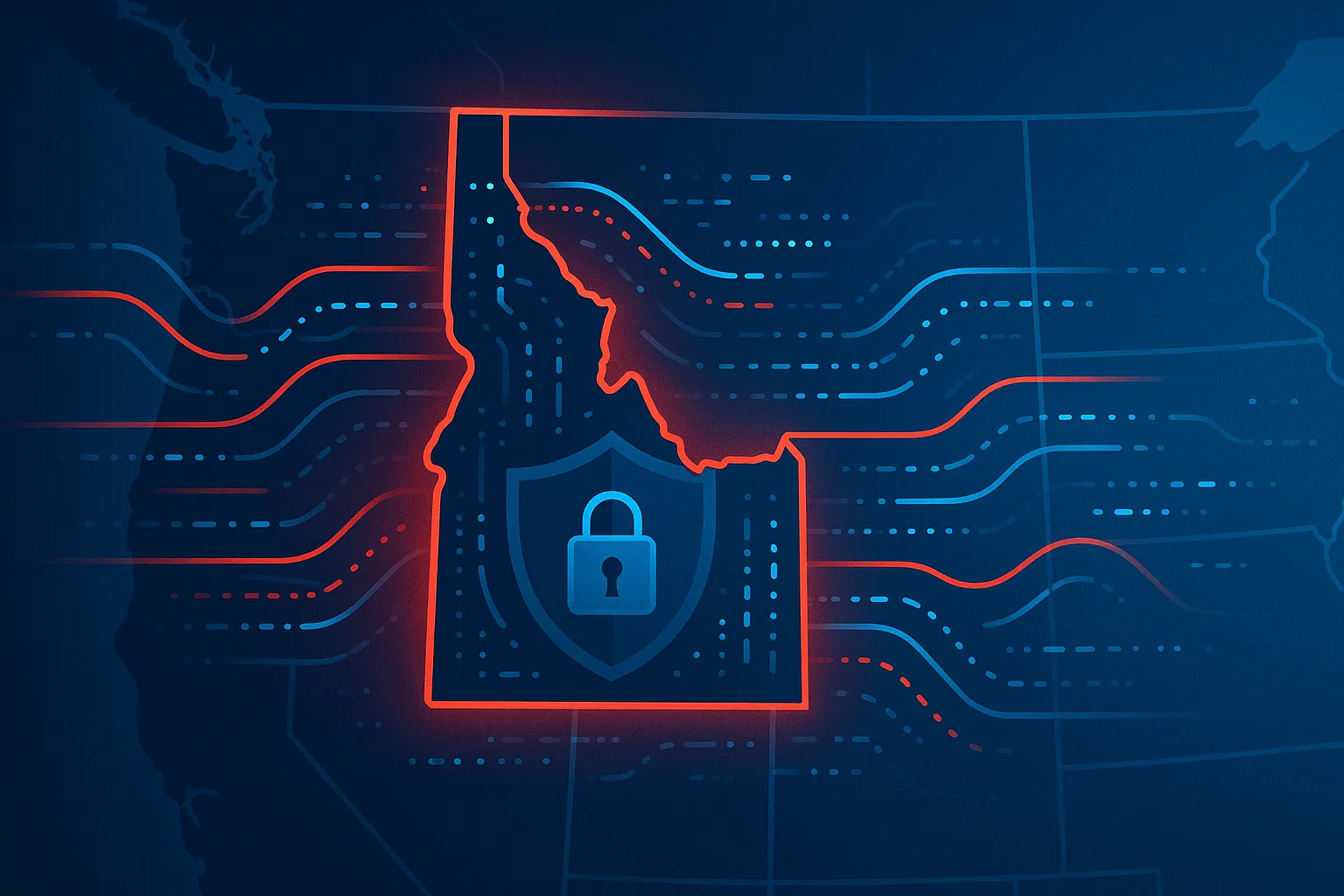
Spokane companies skip cloud-based DR because Coeur d'Alene offers something AWS us-west-2 can't: a facility 45 minutes away, on the same power grid region, with data that never leaves Idaho. IDACORE North is open for active orders now, priced at $300/kW/month with no long-haul egress fees or cross-region replication surprises.
Why Does DR Distance From Spokane Matter?
Disaster recovery has a distance sweet spot. Too close, and a regional event — a grid failure, a wildfire, an ice storm that takes out transmission lines — takes out both your primary site and your backup at once. Too far, and you're paying for latency you don't need and dealing with a support relationship that's a ticket queue on another continent, figuratively speaking.
Coeur d'Alene sits in the sweet spot. It's roughly 45 minutes from Spokane by I-90, close enough that your team can drive there for a hands-on incident, far enough that it's a separate utility footprint and a separate weather system. If a Spokane-area outage takes down your primary infrastructure, IDACORE North isn't sharing the same substation or the same ice storm.
Compare that to what most Spokane companies actually do for DR today: replicate to us-west-2 (Oregon) or us-west-1 (California). Both work. Neither is fast, neither is cheap at scale, and neither keeps your data in Idaho if compliance or contract terms require it.
What Does "Regional Redundancy" Actually Require?
Real redundancy isn't just a second copy of your data somewhere else. It's:
- A separate power grid connection, not just a separate room
- Enough physical distance to avoid shared-event risk
- Fast enough network paths that failover doesn't tank application performance
- A facility you can actually get people into during an incident
IDACORE North checks all four. It's on Idaho Power's grid, not sharing infrastructure with Spokane utilities. It's a distinct facility at 2115 N Government Way in Coeur d'Alene — not a rebranded closet. And because it runs the same $300/kW/month pricing and committed IP transit model as IDACORE Boise, you're not paying a premium for redundancy. You're paying the same predictable rate you'd pay for primary colocation.
How Does This Compare to Cloud-Based DR?
Cloud DR sounds simple until you read the egress bill. Replicating a few terabytes a day out of AWS, plus the compute to keep a warm standby running, adds up fast — and it's billed per-GB, which means the month you actually need DR (because something went wrong and traffic spiked) is the month your bill spikes too.
Here's a rough comparison for a Spokane-area company running a 10TB warm standby with daily replication:
| AWS DR (us-west-2) | IDACORE North | |
|---|---|---|
| Compute (standby instances) | ~$1,800/mo | Included in kW pricing |
| Egress/replication | ~$900/mo (usage-dependent) | Flat IP transit, no egress fees |
| Power cost model | Bundled, opaque | $300/kW/month, metered |
| Latency to Spokane | 20-25ms | Sub-5ms |
| Data residency | Multi-region, unclear | Idaho only |
| Contract term | Annual commit typical | 12-month standard |
The IDACORE number is predictable regardless of how much traffic you push during a failover event. That matters most exactly when you need it most — during an actual incident, when your DR site is carrying production load and you don't want variable billing compounding the stress.
What Does a Real Failover Setup Look Like?
Say you're running a SaaS platform out of a Spokane-area office or a small hosting footprint, with your primary database and app tier on-prem or in a nearby facility. A practical DR pattern at IDACORE North looks like:
- Provision a standby rack or per-U footprint sized to your production load (start small — 4U, 800W, is plenty for a warm standby database and a couple of app instances)
- Set up async replication over committed IP transit — a 1G commit at $450/month handles most mid-size workloads with room to spare
- Keep DNS failover or a load balancer health check pointed at both sites
- Test failover quarterly — not annually, quarterly, because untested DR is a hope, not a plan
At $300/kW/month, that 800W standby footprint runs about $240/month for power, plus the transit commit. Compare that to a cloud standby environment running similar compute, and the Idaho option comes out ahead before you even factor in egress.
Why Does On-Net IP Transit Matter for DR?
DR isn't just about having a second copy of your data — it's about the network path getting to it. IDACORE runs its own ASN and BGP peering across both Idaho facilities, dark-fiber-linked to IDACORE Boise, so failover traffic between your Coeur d'Alene standby and Boise (or your Spokane office) rides infrastructure we control end to end. We're not reselling transit from somebody else and hoping their routing decisions align with your failover requirements.
Committed bandwidth is priced flat by tier — 100M at $150/month, 1G at $450/month, 10G at $1,350/month — billed at 95th percentile. No per-GB surprises when your failover event pushes real traffic through the pipe. That's the opposite of hyperscaler egress billing, where the month you need DR most is the month the bill punishes you for using it.
What About Compliance and Data Residency?
If you're in healthcare, finance, or anything touching government contracts, data residency isn't optional. IDACORE North's power and transit pricing mirrors Boise, and your data stays within Idaho state lines — it doesn't get replicated to an out-of-state region as part of some default cloud DR template. For companies that need HIPAA-aligned infrastructure or are working toward SOC 2 attestation, keeping primary and DR data in the same state simplifies the audit story considerably. One state, one set of data handling questions, not three cloud regions to explain to an auditor.
Frequently Asked Questions
How far is IDACORE North from Spokane?
IDACORE North sits at 2115 N Government Way in Coeur d'Alene, roughly 45 minutes from downtown Spokane by I-90. That's close enough for hands-on incident response but far enough to be on a separate power grid and weather system, which is what real disaster recovery redundancy requires.
What does colocation cost at IDACORE North?
IDACORE North bills at $300/kW/month based on actual power draw, with 1U minimum colocation and no power commitment minimum. A 400W DR server, for example, costs about $120/month in power. Pricing matches IDACORE Boise exactly — only IDACORE East (Eastern Oregon) uses a different model.
Is IDACORE North better than cloud-based DR for Spokane companies?
For most workloads, yes, on cost predictability. Cloud DR bills egress per-GB, which spikes exactly when you're using DR most — during an actual failover. IDACORE North uses flat, committed IP transit pricing (starting at $150/month for 100M) with no egress surprises, plus sub-5ms latency to the Treasure Valley and fast paths to Spokane.
Does IDACORE North keep data within Idaho?
Yes. IDACORE North is a physical facility in Coeur d'Alene, Idaho, and data stored there doesn't cross state lines as part of standard operations. This matters for companies with compliance requirements around data residency, including HIPAA-aligned workloads and government contracts.
Can I connect IDACORE North to IDACORE Boise for a multi-site setup?
Yes. IDACORE offers private transport between IDACORE North, IDACORE Boise, and IDACORE East, all running on our own ASN with BGP peering we control directly. That means a Coeur d'Alene DR site and a Boise production site can run tight, predictable replication without depending on a third-party transit provider.
If you're a Spokane-area company still running DR out of a cloud region three states away, it's worth running the numbers on a Coeur d'Alene footprint instead — 45 minutes closer, flat power pricing, and IP transit you're not gambling on during the one week you actually need it. Talk to our team about sizing a DR footprint at IDACORE North at https://idacore.com/contact.