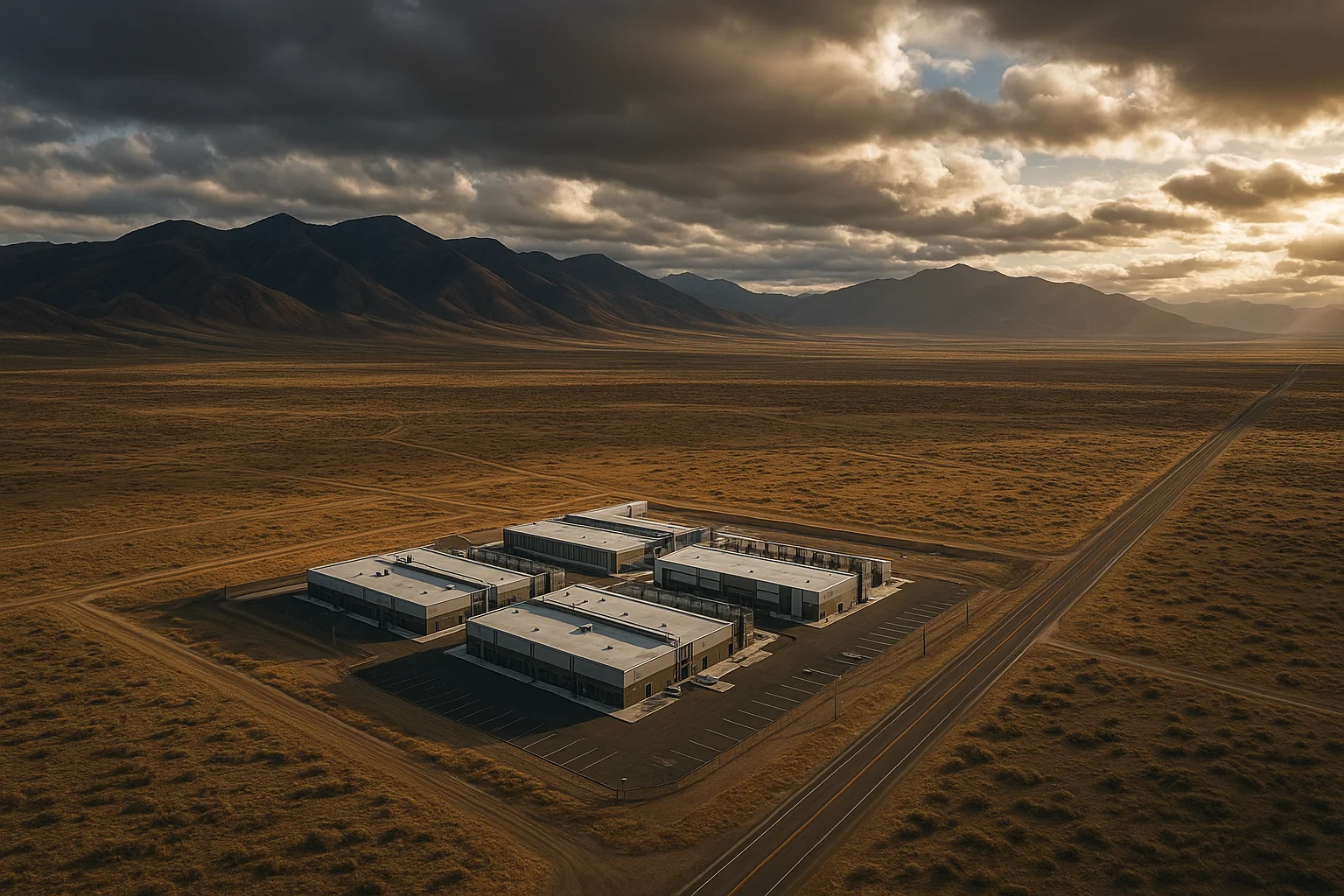
If you're running production in Seattle, a second cabinet in Seattle isn't a disaster recovery plan — it's the same disaster twice. IDACORE North in Coeur d'Alene, Idaho puts your DR site on a different grid, different seismic zone, and 45 minutes from Spokane, with per-U colocation open for active orders now at $300/kW/month.
Why Does a Second Seattle Cabinet Fail as a DR Strategy?
Disaster recovery is supposed to protect you from correlated failure. A second cabinet in the same metro doesn't do that. Seattle sits on the Cascadia subduction zone, draws power from the same regional grid, and shares the same wildfire smoke season, the same fiber conduits under the same streets, and often the same utility substations as your primary site. If a grid event, an earthquake, or a regional fiber cut takes out your primary, there's a good chance it takes out your "backup" too.
I've watched companies pay for redundant infrastructure that fails the same way twice in one afternoon. That's not redundancy. That's just spending twice for one point of failure.
Real DR means geographic separation from the specific risks that threaten your primary site: seismic activity, wildfire-driven power shutoffs, grid congestion, coastal flooding. Coeur d'Alene checks those boxes for a Seattle-based company in a way that a second building six miles from your first one never will.
What Does "One Grid Away" Actually Mean?
Idaho runs on a different power grid footprint than western Washington, with Idaho Power and Avista serving the region at commercial rates around $0.055/kWh — roughly half the national average. Coeur d'Alene sits outside the Cascadia subduction zone and outside the wildfire-driven public safety power shutoff zones that have hit parts of Washington and Oregon in recent years. It's a different utility, different seismic profile, different wildfire exposure. That's what "one grid away" means in practice — not marketing language, just physically separate infrastructure feeding your backup.
How Close Is IDACORE North to Spokane?
IDACORE North sits at 2115 N Government Way in Coeur d'Alene, roughly 45 minutes from downtown Spokane by I-90. That distance matters more than it looks on a map. It's close enough that your team can drive out for a hands-on visit, rack a server, or troubleshoot in person without burning a full day of travel. It's far enough to sit outside the blast radius of a Spokane-specific outage, fiber cut, or grid event.
For companies with a Spokane or Inland Northwest presence, this makes IDACORE North a practical primary site, not just a backup. For Seattle and Portland companies, it's a DR site your engineers will actually visit instead of treating as a black box they log into once a quarter.
What About Latency for Failover?
Coeur d'Alene connects into the same Pacific Northwest fiber routes serving the broader region, and IDACORE runs its own ASN and BGP peering across our facilities — we're not reselling someone else's transit and hoping the routing works out. For most DR architectures — nightly replication, warm standby, async database mirroring — the latency profile from Seattle or Portland to North Idaho is well within tolerance. If your DR plan depends on sub-millisecond synchronous replication, no colocation facility outside your building solves that problem; that's an architecture question, not a distance question.
What Does DR at IDACORE North Actually Cost?
Power and transit pricing at IDACORE North match IDACORE Boise exactly — $300/kW/month, billed on actual power draw, with no minimum power commitment and a 1U minimum footprint. You're not forced into a half-cabinet you don't need just to get a DR presence started.
Here's a real example. A Seattle-based SaaS company runs a 400W failover server — a database replica and a lightweight app tier — as a warm standby. That's 0.4 kW x $300 = $120/month for power. Add a 1G transit commit at $600/month if they want independent internet access at the DR site rather than routing failover traffic back through their primary. Total: $720/month for a DR posture in a different seismic zone, different grid, different wildfire risk profile.
Compare that to standing up equivalent capacity in a second Seattle-metro facility, where real estate and power costs run higher and you still haven't solved the correlated-risk problem.
| Factor | Second Seattle Cabinet | IDACORE North (Coeur d'Alene) |
|---|---|---|
| Grid independence | Same regional grid | Separate utility, separate grid footprint |
| Seismic zone | Cascadia subduction zone | Outside subduction zone |
| Wildfire PSPS risk | Elevated in parts of WA | Low |
| Distance from Spokane | N/A | ~45 minutes |
| Power pricing | Market-dependent, often higher | $300/kW/month, no minimum |
| Commercial power rate | Higher | ~$0.055/kWh (Idaho Power) |
| Contract term | Often 36 months | 12-month standard |
What Compliance Standards Does IDACORE North Meet?
DR sites for regulated workloads need the same compliance posture as production. IDACORE North operates under the same certification framework as IDACORE Boise — SOC 2 Type II, PCI DSS, NIST 800-53, SSAE-16, and HITRUST CSF — and is compliance-ready for HIPAA, financial services, and government workloads. Your DR environment doesn't become the weak link in an audit just because it's in a different building.
Data residency matters here too. Everything at IDACORE North stays in Idaho. It doesn't cross state lines, doesn't touch a hyperscaler region in another country, and doesn't introduce a jurisdictional question into your compliance story.
Frequently Asked Questions
Is IDACORE North a good primary site or only for disaster recovery?
Both. IDACORE North supports per-U and full cabinet colocation with no power minimum, so it works as a primary site for companies serving the Inland Northwest or as a DR site for companies based in Seattle, Portland, or elsewhere on the West Coast. Pricing and terms are identical either way — $300/kW/month, 12-month standard contracts.
How far is IDACORE North from Spokane, Washington?
IDACORE North, at 2115 N Government Way in Coeur d'Alene, Idaho, is approximately 45 minutes from downtown Spokane by car via I-90. That's close enough for hands-on rack access and troubleshooting without a full-day trip.
Does IDACORE North use the same power grid as Seattle or Portland?
No. IDACORE North draws from Idaho utility infrastructure, separate from the grids serving western Washington and Oregon. That separation is a core part of why it works as a genuine DR site rather than a redundant cabinet exposed to the same regional grid risk.
What does colocation cost at IDACORE North?
Power is billed at $300/kW/month based on actual draw, with no minimum power commitment and a 1U minimum footprint. A 400W server costs $120/month in power. IP transit is priced separately by committed bandwidth tier, starting at $170/month for 100Mbps.
Is IDACORE North compliant for healthcare or financial data?
Yes. IDACORE North operates under SOC 2 Type II, PCI DSS, NIST 800-53, SSAE-16, and HITRUST CSF certifications and is compliance-ready for HIPAA, financial, and government workloads, with all data staying within Idaho.
If your DR plan is currently "a second rack in the same city," it's time to fix that gap. Talk to our team about IDACORE North and get a DR footprint in Coeur d'Alene running on a different grid, priced with no power minimum and no 36-month contract lock-in.